

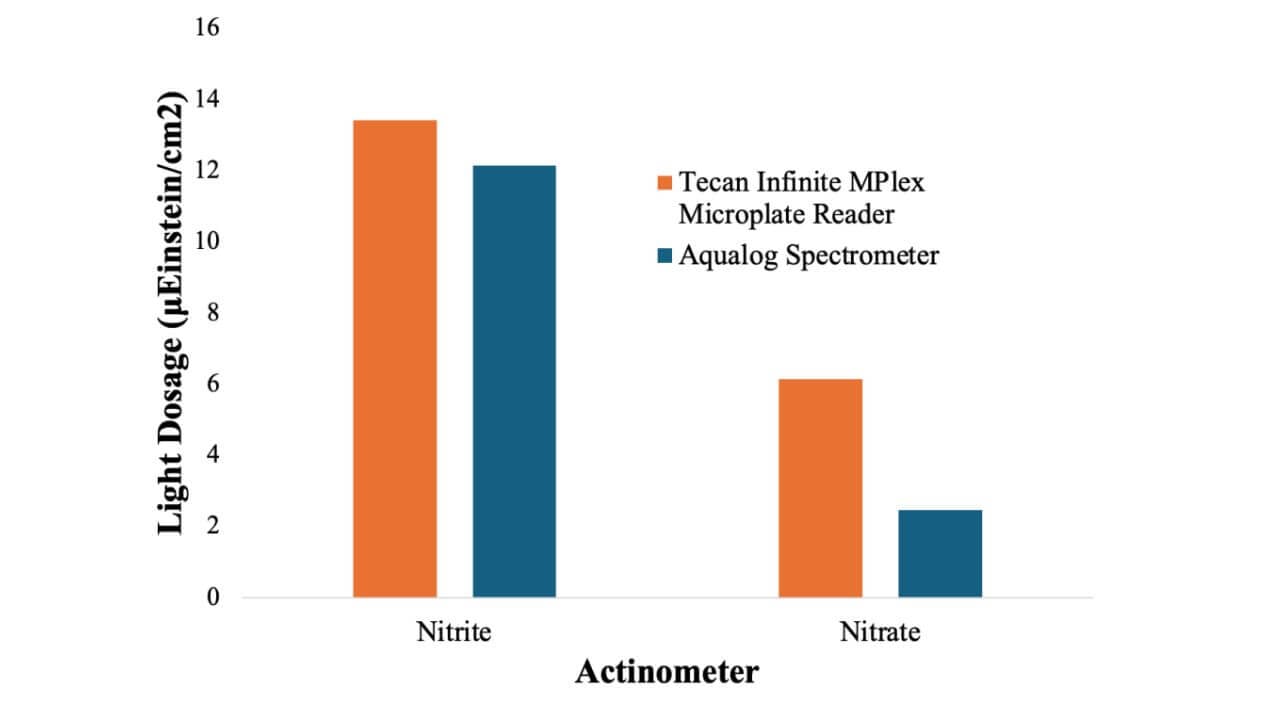
A) Comparison of NO2 - and NO3 - actinometer light dosages (μEinstein/cm2) using the Tecan and the Aqualog

Chemistry

Chemistry
Maya Weathers '27 counducted this research as a part of CHE 490: Chemistry Research I.
Photolysis plays a significant role in atmospheric and aquatic chemistry, assisting in many natural processes. Photolysis allows for the formation of ozone in our atmosphere, protecting life on Earth from harmful ultraviolet (UV) rays, as well as the degradation of trace organic molecules including pesticides and pharmaceuticals. During photolysis, molecules absorb light and decompose into new, excited molecules. When studying photochemical reactions, it is essential to accurately measure the amount of light the sample is exposed to, or the light dosage. One way to quantify light dosage is using chemical light meters, or actinometers.

Chemistry, Environmental Science
College of Arts & Sciences
Photolysis and Fluorescence
Nitrite and Nitrate Actinometers and the Production of Salicylic Acid
Photolysis of Nitrate:
NO3- + hν → NO2* + O-*
Photolysis of Nitrite:
NO2- + hν → NO* + O-*
Production of Hydroxyl Radical (·OH):
O-* + H2O → ·OH + OH-
Production of salicylic acid (SA) and phydroxybenzoic acid (p-HBA):
·OH (radical) + benzoic acid → SA + p-HBA
Aims
Sampling
Analysis
Tecan Infinite MPlex Microplate Reader
Aqualog Spectrometer
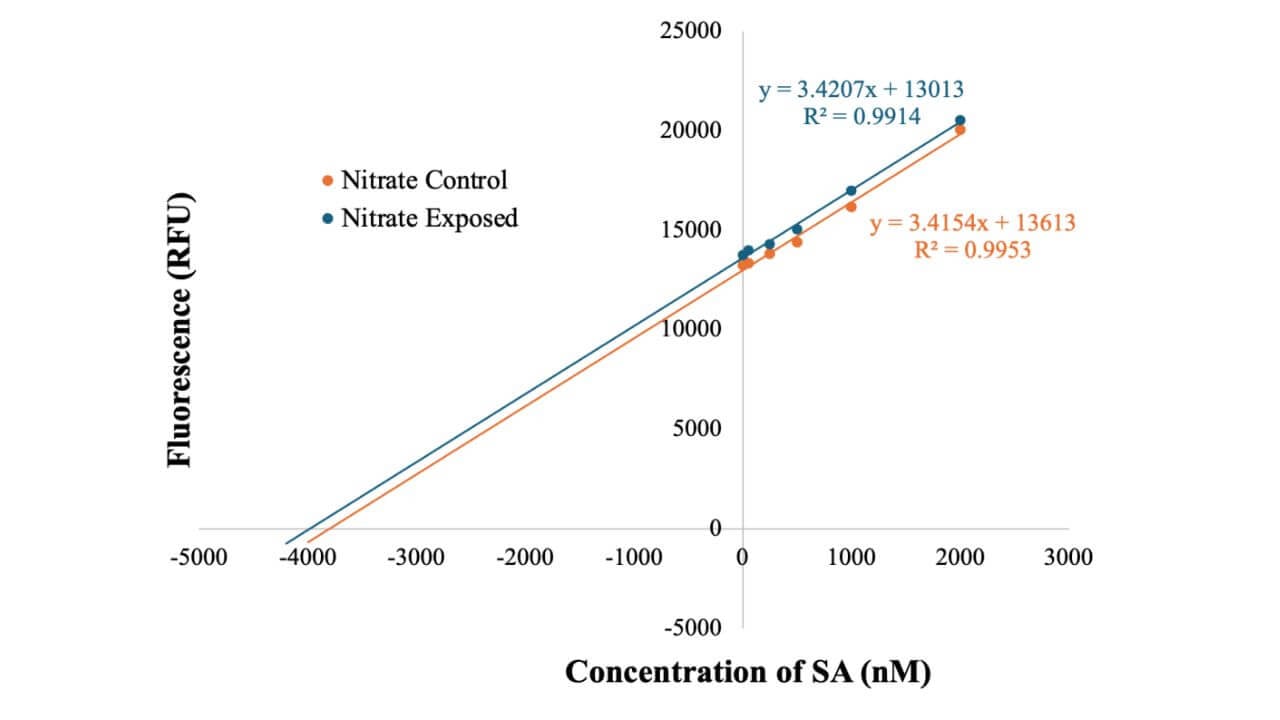
Figure 1. Standard addition curves of the fluorescence of SA from exposed and control NO3 - actinometers using the Tecan
A) Comparison of NO2 - and NO3 - actinometer light dosages (μEinstein/cm2) using the Tecan and the Aqualog
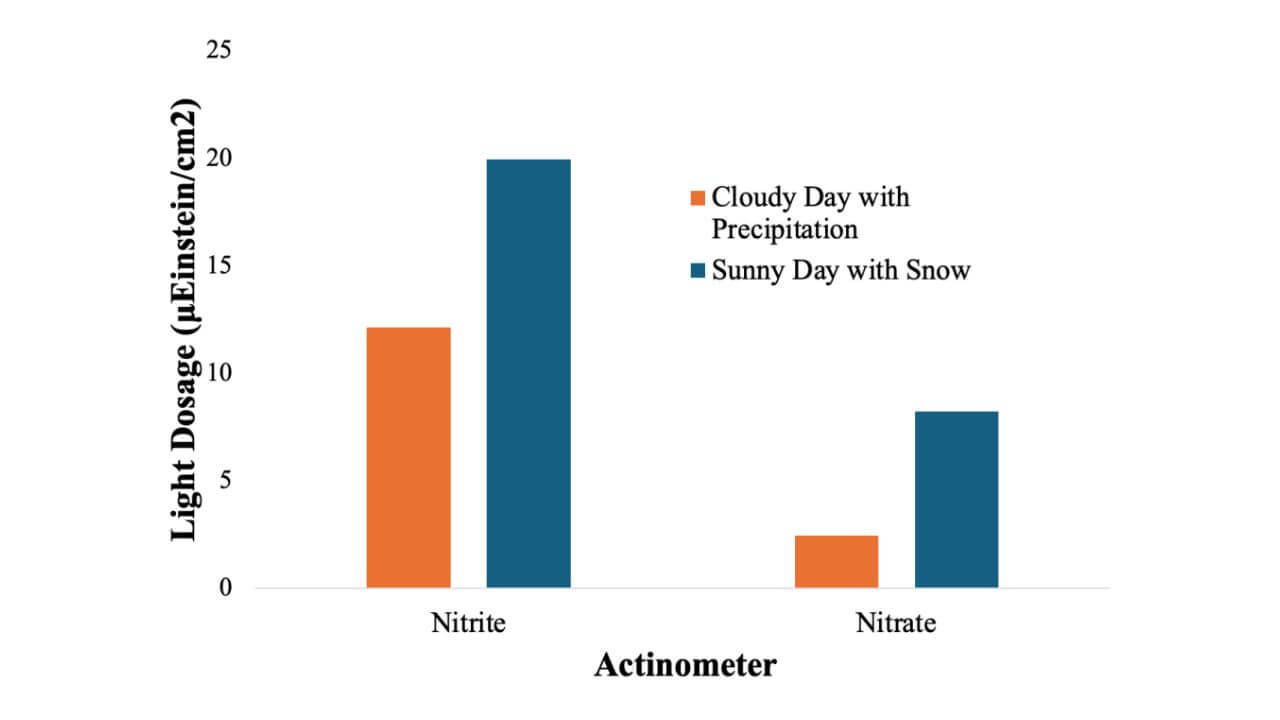
B) Comparison of NO2 - and NO3 - actinometer light dosages (μEinstein/cm2) when exposed to different weather conditions using the Tecan.
1Jankowski, J. J., et al. 1999. J. Photochem. Photobiol. doi: 10.1562/0031-8655(1999)070
2Jankowski, J. J., et al. 2000. J. Photochem. Photobiol. doi: 10.1562/0031-8655(2000)071
3Kieber, D. J., et al. 2007. Aquat. Sci. doi: 10.1007/s00027-007-0895-0
"This project has prepared me for my future career in many ways. Creating a procedure based on academic journals and research is a challenge, but seeing results is a great reward. From this project, I was able to create a complete protocol for an Instrumental Analysis lab, which was added to the coursework this semester. This experienced allowed me to practice my scientific writing abilities and challenged me to be as precise as possible. I was also able to work more in depth with new instruments, which allowed me to gain a greater understanding of how they operate. As a chemistry and environmental science major, I am very passionate about human health and sustainability, and I hope to start a career within the pharmaceutical industry. Understanding how pharmaceuticals decompose in nature is essential for the health of not only our environment, but also our people. Studying photolysis has been a great experience and I look forward to continuing this research in the future!" - Maya Weathers '27
This serves as an overview of the project and does not include the complete work. To further discuss this project, please email Maya Weathers.
In CHE 490: Chemistry Research I, students work closely with a faculty mentor on a chemistry research project.
We've sorted each of our undergraduate, graduate and doctoral programs into unique Areas of Interest. Explore these categories to discover which programs and delivery methods best align with your educational and career goals.
Explore Environment and Sustainability at Quinnipiac