


Political Science
Civic Education
Political Science
Civic Education
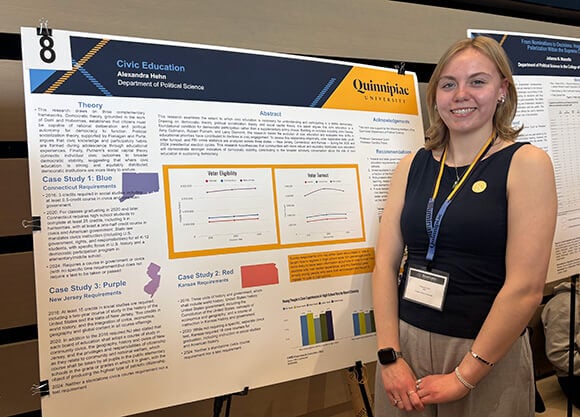
Alexandra Hehn ’26 completed this project as a part of PO 408: Senior Seminar for Political Science majors.
Overview
This project explores the necessity of civic education for a stable democracy. Civic education is a foundational condition for democratic participation rather than a supplementary policy choice.
Researcher

Alexandra Hehn ’26
Political Science
College of Arts & Sciences
Civic Education
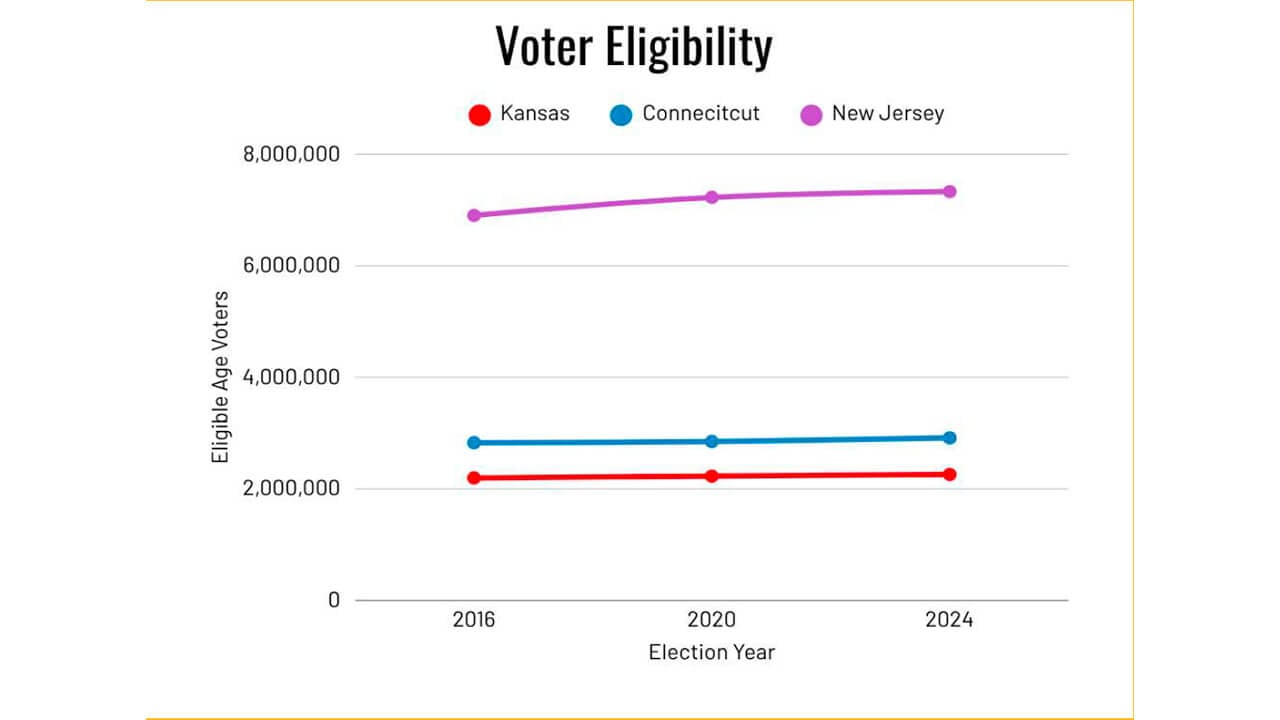
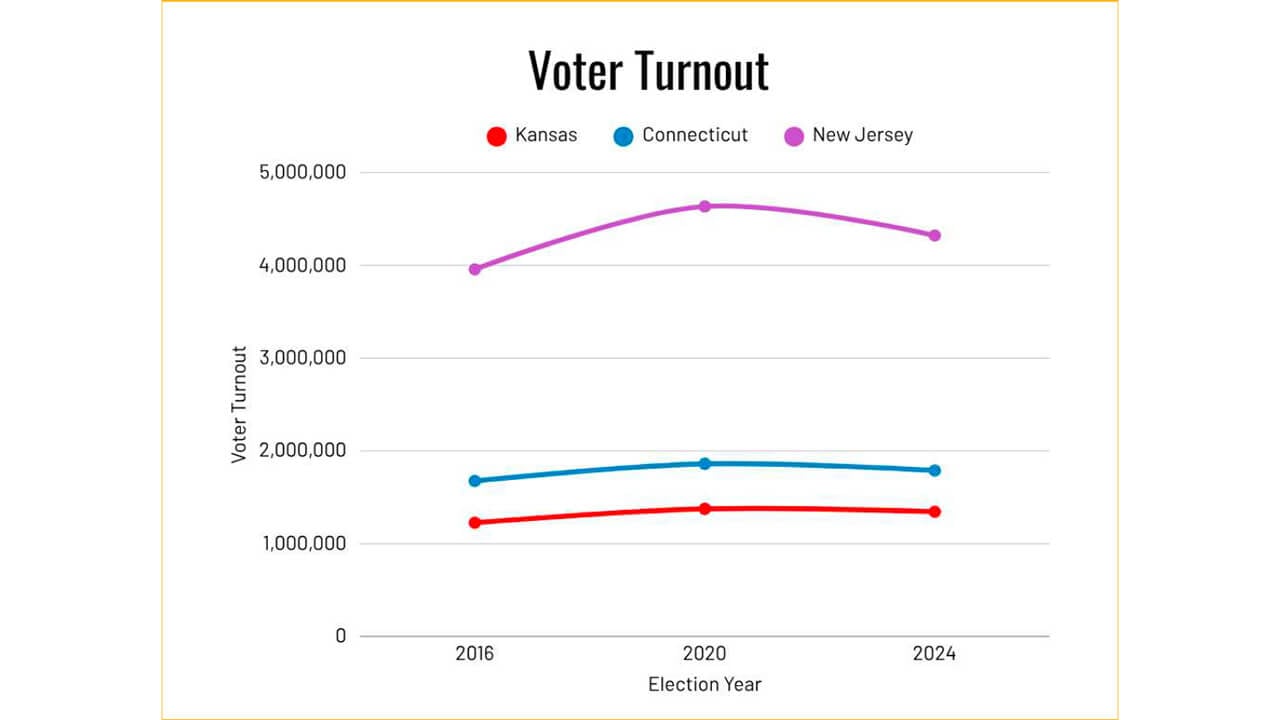
This research examines the extent to which civic education is necessary for understanding and participating in a stable democracy. Drawing on democratic theory, political socialization theory, and social capital theory, this paper argues that civic education is a foundational condition for democratic participation rather than a supplementary policy choice. Building on scholars including John Dewey, Amy Gutmann, Robert Putnam, and Larry Diamond, this research traces the evolution of civic education and evaluates how shifts in educational priorities have contributed to declines in civic engagement. To assess this relationship empirically, voter registration data, youth voter turnout, and FBI crime statistics are analyzed across three states — New Jersey, Connecticut, and Kansas — during the 2020 and 2024 presidential election cycles. This research hypothesizes that communities with more robust and equitably distributed civic education will demonstrate stronger indicators of democratic stability, contributing to the broader scholarly conversation about the role of civic education in sustaining democracy.
Theory
This research draws on three complementary frameworks. Democratic theory, grounded in the work of Dahl and Habermas, establishes that citizens must be capable of rational deliberation and political autonomy for democracy to function. Political socialization theory, supported by Flanagan and Purta, argues that civic knowledge and participatory habits are formed during adolescence through educational experiences. Finally, Putnam's social capital theory connects individual civic outcomes to broader democratic stability, suggesting that where civic education is strong and equitably distributed, democratic institutions are more likely to endure.
Case Study 1: Blue
Connecticut Requirements
- 2016: 3 credits required in social studies including at least 0.5-credit course in civics and American government.
- 2020: For classes graduating in 2020 and later, Connecticut requires high school students to complete at least 25 credits, including 9 in humanities, with at least a one-half credit course in civics and American government. State law mandates civics instruction (including U.S. government, rights, and responsibilities) for all K-12 students, with specific focus in U.S. history and a democratic participation program in elementary/middle school.
- 2024: Requires a course in government or civics (with no specific time requirement) but does not require a test to be taken or passed.
Case Study 2: Red
Kansas Requirements
- 2016: Three units of history and government, which shall include world history; United States history; United States government, including the Constitution of the United States; concepts of economics and geography; and a course of instruction in Kansas history and government.
- 2020: While not requiring a specific, separate civics test, Kansas required 16 core courses for graduation, including instruction in social studies and American history.
- 2024: Neither a standalone civics course requirement nor a test requirement.
Case Study 3: Purple
New Jersey Requirements
- 2016: At least 15 credits in social studies are required, including a two-year course of study in the history of the United States and the state of New Jersey, "five credits in world history; and the integration of civics, economics, geography and global content in all course offerings.
- 2020: In addition to the 2016 required NJ also stated that each board of education shall adopt a course of study in community civics, the geography, history and civics of New Jersey, and the privileges and responsibilities of citizenship as they relate to community and national welfare, which course shall be taken by all pupils in the public elementary schools in the grade or grades in which it is given, with the object of producing the highest type of patriotic citizenship.
- 2024: Neither a standalone civics course requirement nor a test requirement.
Recommendations
Federal and state governments standardize civic education requirements across all middle and high schools. Invest equitable in civic programs, potentially receive a fraction of the funding allocated to STEM programs. Policymakers should prioritize community-based learning, media literacy, and deliberation skills as core elements of civic curricula. Future research should address the gap between civic learning and adult democratic participation to better understand long-term impact of this education on the democratic stability.
Graphs
For Further Discussion
This serves as an overview of the project and does not include the complete work. To further discuss this project, please email Alexandra Hehn.
Course Overview
PO 408: is a capstone course for senior political science majors. Students integrate prior learning with a seminar topic announced each year, and prepare and present original research to their peers in the form of a senior thesis, related to a common seminar theme announced each year. The seminar allows students to apply the knowledge and methodology they have learned in previous courses to a particular project.
Explore Our Areas of Interest
We've sorted each of our undergraduate, graduate and doctoral programs into unique Areas of Interest. Explore these categories to discover which programs and delivery methods best align with your educational and career goals.