You can turn personalized recommendations back on at any time.
Turn on personalized recommendations?
Get personalized recommendations based on your interests and activity.
QUIP-RS
Interdisciplinary Program for Research and Scholarship
QUIP-RS
Interdisciplinary Program for Research and Scholarship
Hands-On Workshop | In the Community
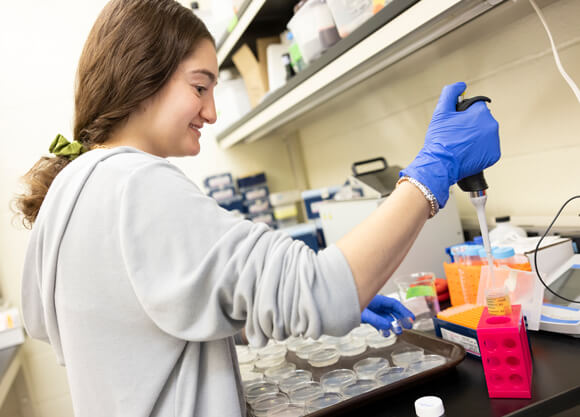
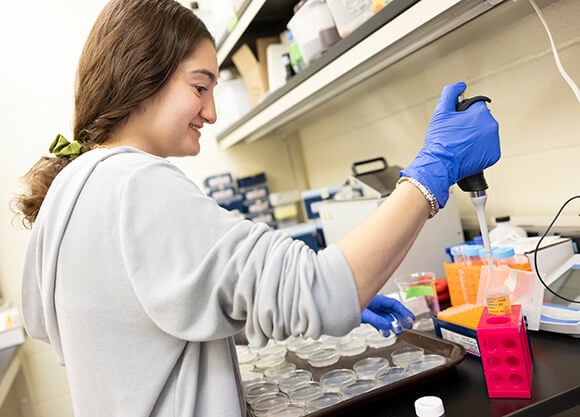
Open to students of all majors, QUIP-RS provides up to $5,000 in funding for undergraduate students to conduct research or complete creative projects alongside faculty mentors. This intensive 8-week program enables students to develop scholarly skills while encouraging discussion about successes and shortcomings with fellows and mentors.
QUIP-RS Benefits
In addition to hands-on experience in developing scholarly skills, QUIP-RS offers:
A $4,000 stipend and $1,000 for research supplies and conference travel.
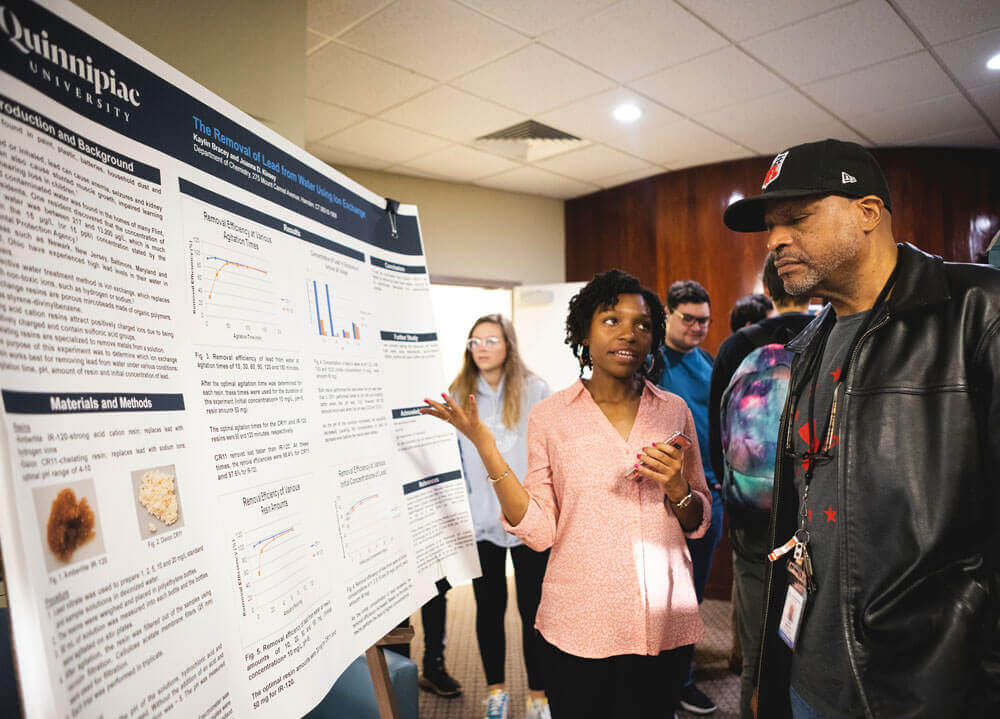
A research poster for presentations.
A discount on on-campus housing during the program.
Opportunities for students in all undergraduate programs.
Weekly interdisciplinary meetings to discuss project updates, successes and challenges.
The option for multiple students to collaborate on the same project, sharing the stipend and research funds.
Fellows must have availability to be on campus during the summer and fall.
Quinnipiac Today
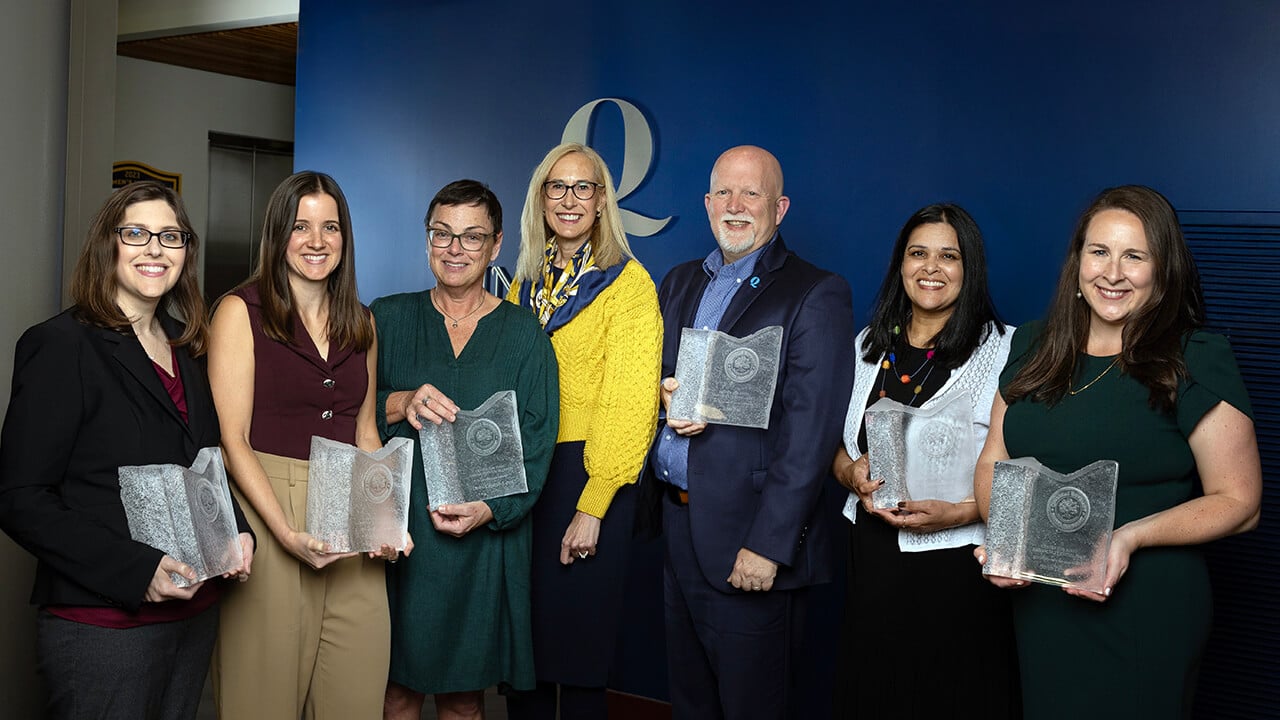
QUIP-RS program celebrates 20 years of career-enhancing, interdisciplinary student research
February 12, 2026
The Quinnipiac University Interdisciplinary Program for Research & Scholarship (QUIP-RS) program is celebrating 20 years of strong interdisciplinary collaboration, faculty mentorship and student outcomes.
Reimagining the Future of Work in Healthcare - A Women-Focused Study of AI and Workflow Redesign
Computer Science
School of Computing & Engineering
Chetan Jaiswal
Ava Real ’27
The Impact of PFAS Exposure on Ceratina calcarata Development
Biology and Environmental Studies
College of Arts & Sciences
Sarah Lawson
Jaden Ng ’28
Micro‑pharmacy drones with on‑board diagnostics
Mechanical Engineering
School of Computing & Engineering
Lynn Byers
Jason Warner ’27
Knockdown of CG13579 and Oct-TyrR GPCRs to Assess Cell Migration in Germ Cells and Salivary Glands of Embryonic Drosophila melanogaster
Biomedical Sciences
School of Health Sciences
Caitlin Hanlon
Brandon Meas ’28
Multisensory Integration in an Instagram-Based Environment: The Impact of Auditory Tempo and Color Saturation on Visual Search Performance
Marketing
School of Business
Charles Brooks
Sophia Sciascia ’27
Characterization of transposon mutants in a bacteriophage-producing strain of Borrelia burgdorferi, the Lyme disease agent
Biomedical Sciences
School of Health Sciences
Christian Eggers
Jake Williamson ’27
Robotic ASL Hand
Mechanical Engineering
School of Computing & Engineering
Cameron LaMack
John-Anthony Samuel ’29
The Effects of Neonicotinoids on Local Connecticut Pollinator Species
Biology
College of Arts & Sciences
Sarah Lawson
Cici Harvey ’28
Investigating the Effects of Repeated Juvenile Stress Exposure on Behavioral, Neurobiological, and Coping Responses in a Pre-Clinical Acute Stress Trauma Model
Behavioral Neuroscience
College of Arts & Sciences
Nathaniel Stafford
Aslin Argueta ’28
From Folk to Reggaeton: Music as Resistance in Latin America
Sociology and Hispanic & Latin American Studies
College of Arts & Sciences
Gabriel Acevedo
Kayla Kastenhuber ’28
Function of microRNAs in an ALS disease model in C. elegans
Biochemistry
College of Arts & Sciences
Alexandre de Lencastre
Leonardo Capri Jr. ’28
Hybrid Motor Point Tracking System for Isotonic Contraction on the Bicep Brachii
Mechanical Engineering
School of Computing & Engineering
Cameron Lamack
Maria Tsakova ’28
Investigating cellular response in MCF-7 cells exposed to phthalates through ROS levels and p53 activity
Medical Microbiology & Immunology
School of Health Sciences
Ann Sanoji Samarakkody
Ava Poletski ’29
Accountability of AI Agents and the utilization of distributed ledger technology-based logging mechanisms
Undeclared Business
School of Business
Tan Gurpinar
Isabel Bishop ’27, MHS ’29
Characterizing the Promoter of the Late Phage Operon of ՓBB-1, a Bacteriophage of Borrelia burgdorferi
Entry-Level MHS in Physician Assistant
School of Health Sciences
Christian Eggers
Emily McNeill ’29
AI-Enabled Flexibility as Resource or Ratchet? Reexamining the Motherhood Penalty in the Age of Generative AI
Applied Business
School of Business
Shizhen Jia
Michelle Cristina Barba ’28
Kinetic Analysis of Iron Autooxidation with Anthocyanins
Chemistry
College of Arts & Sciences
Robert Hansen
Tannon Bryant ’27
SmartFocus: Assessing Student Stress Patterns Through Smartphone Usage
Software Engineering
School of Computing & Engineering
Soumyashree Sahoo
Connor Nylund ’27
SmartFocus: Assessing Student Stress Patterns Through Smartphone Usage and Brief Self-Reports
Software Engineering
School of Computing & Engineering
Soumyashree Sahoo
2025 QUIP-RS Symposium
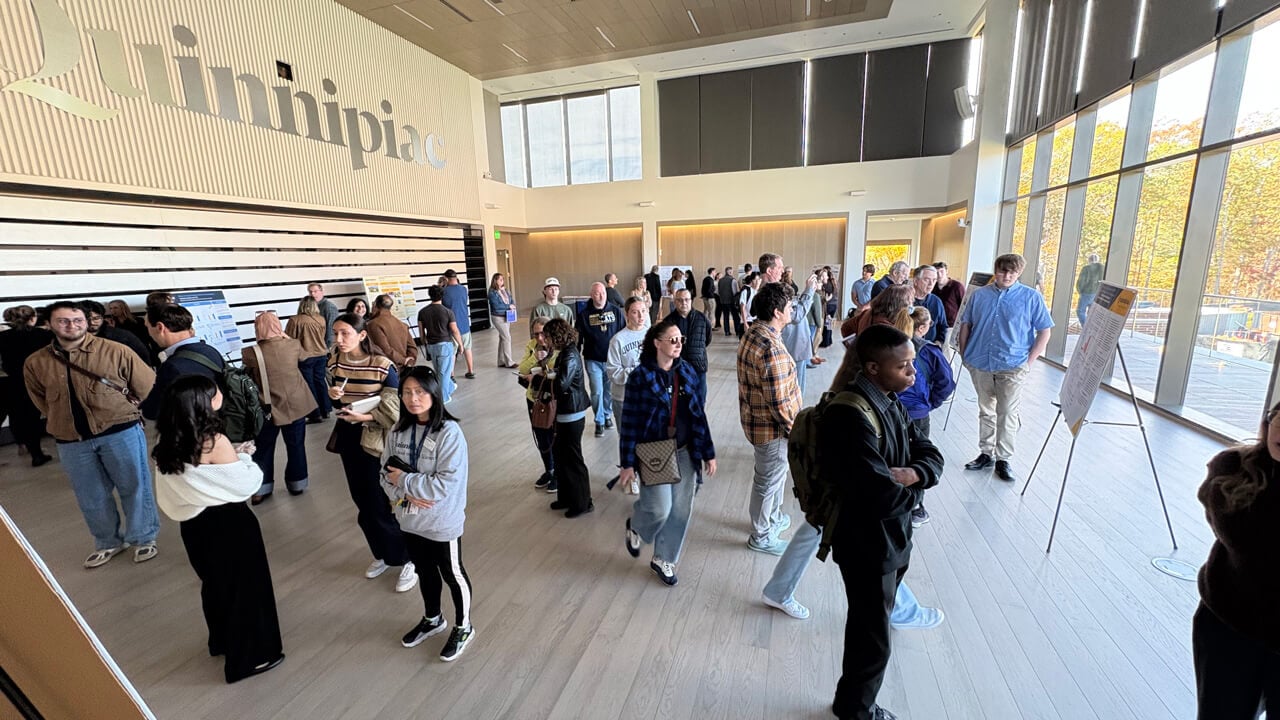
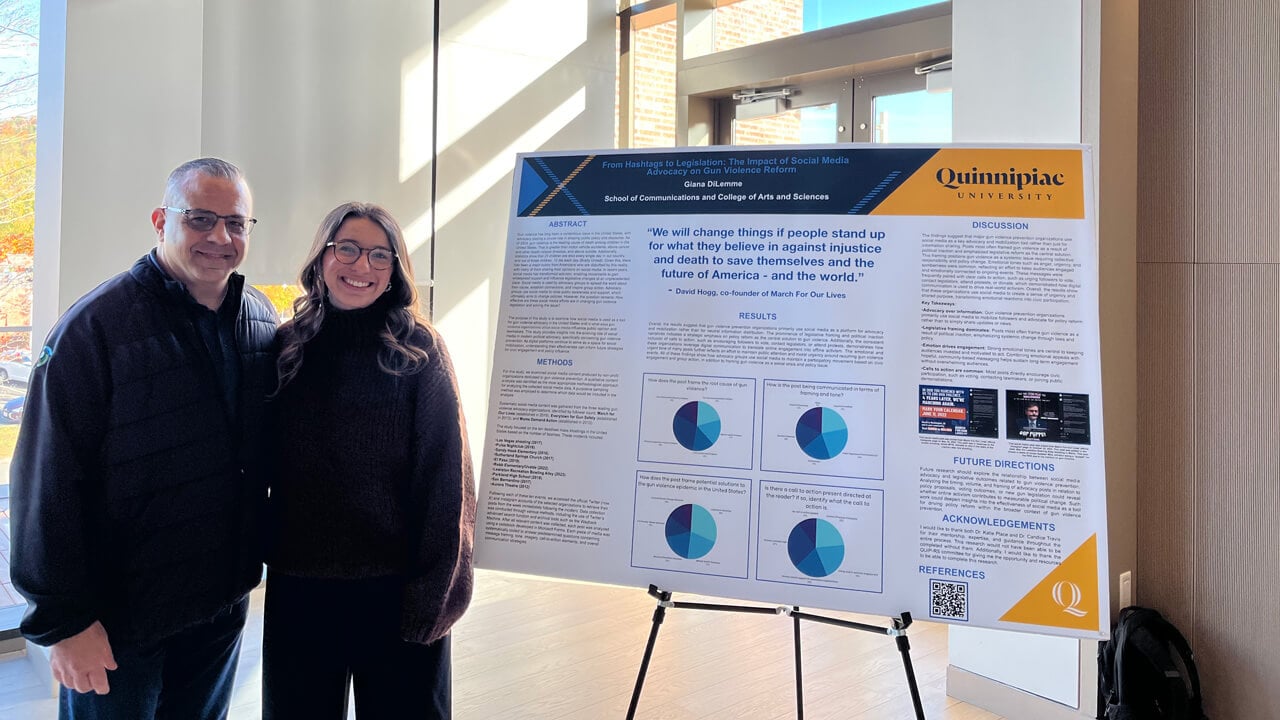
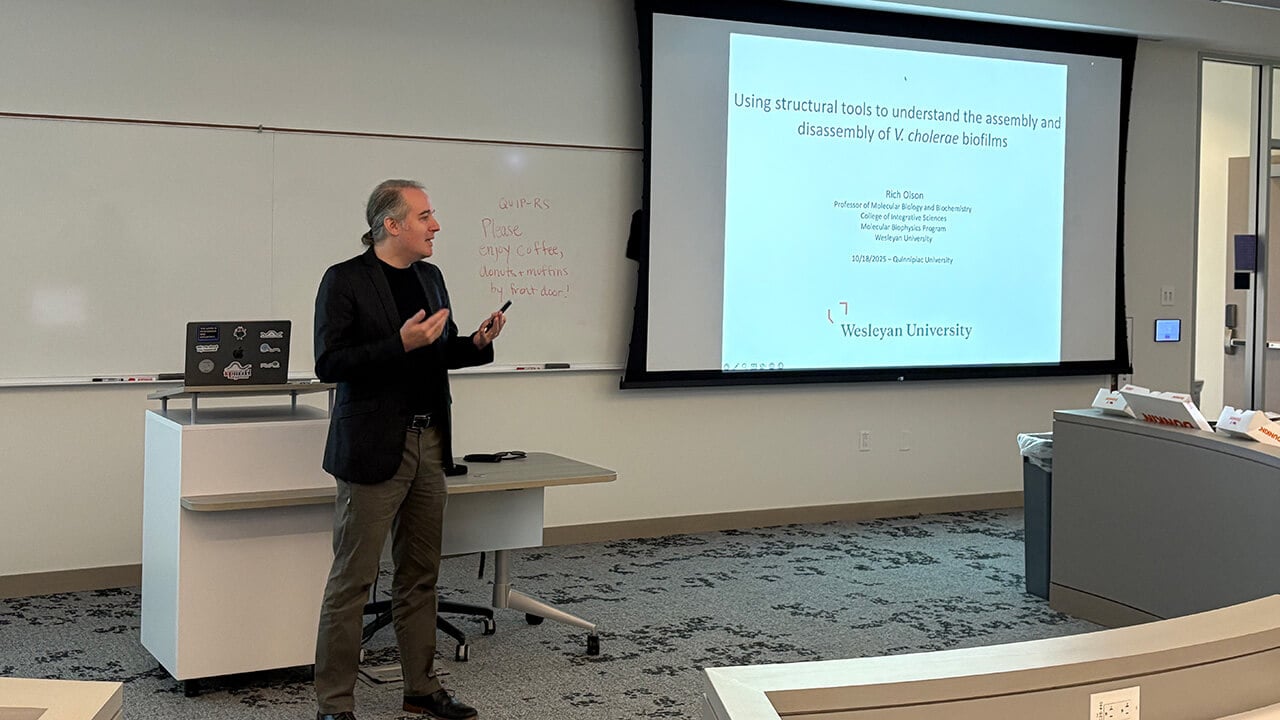
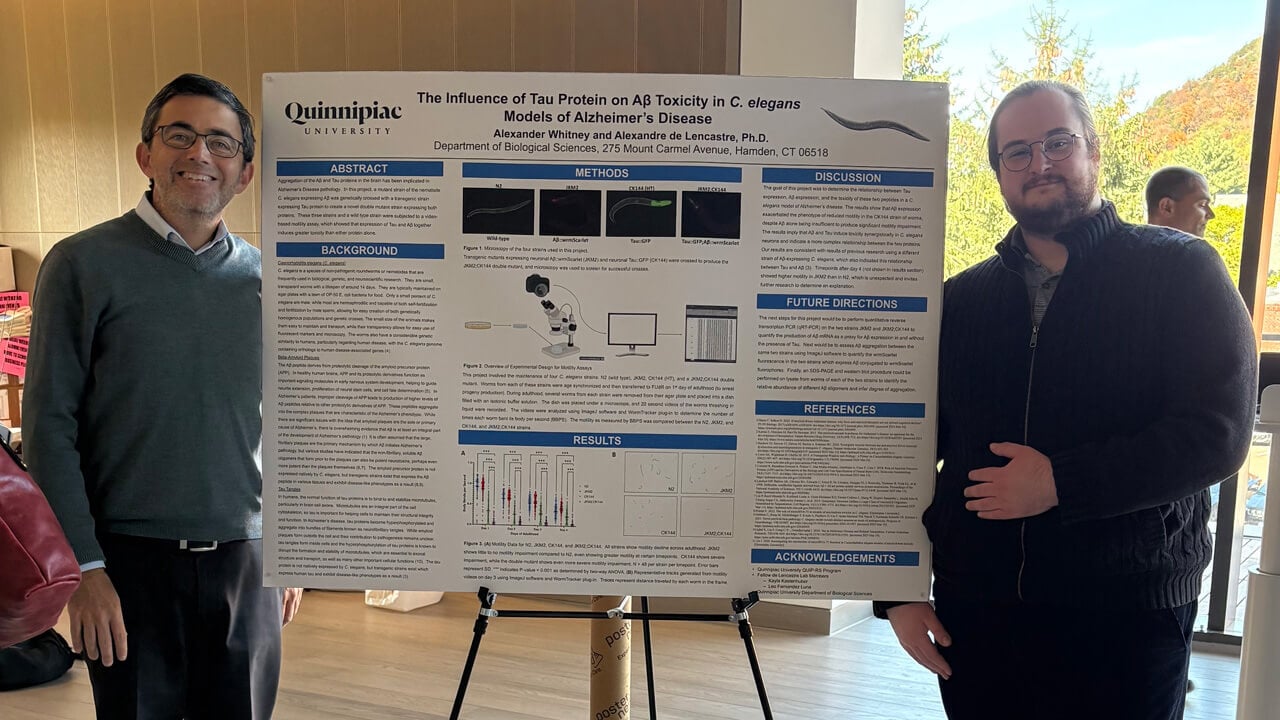
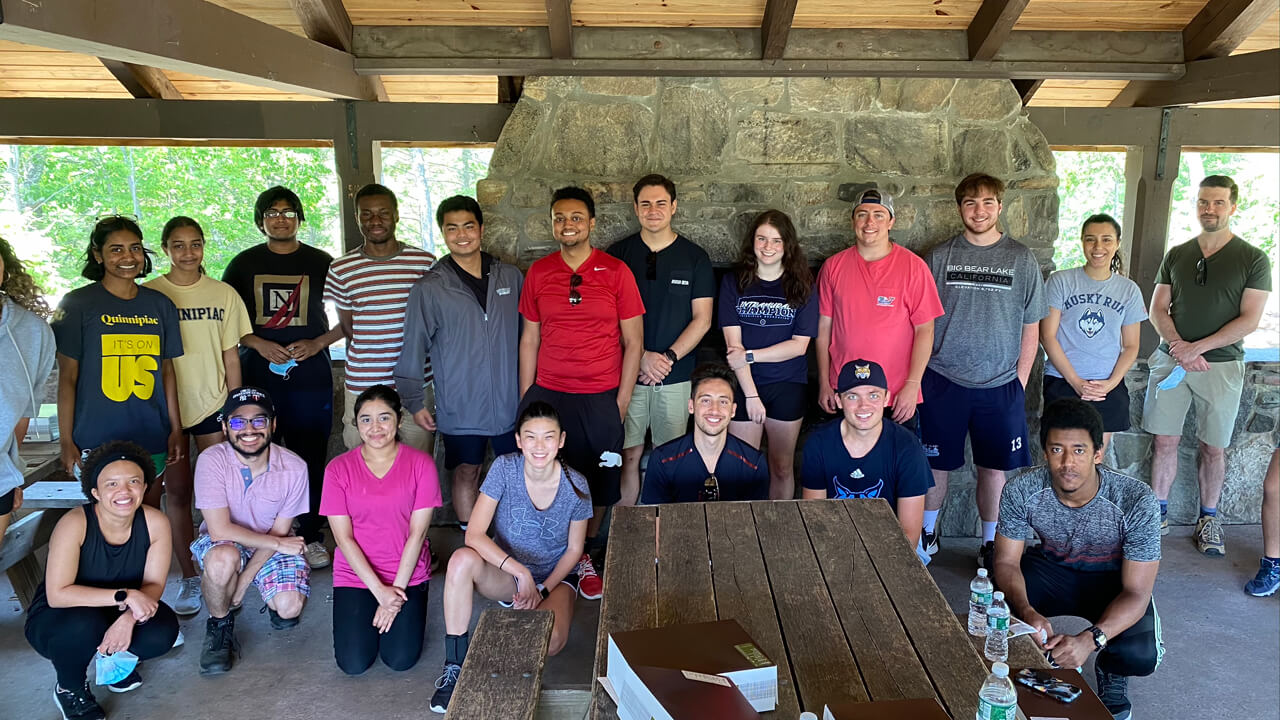
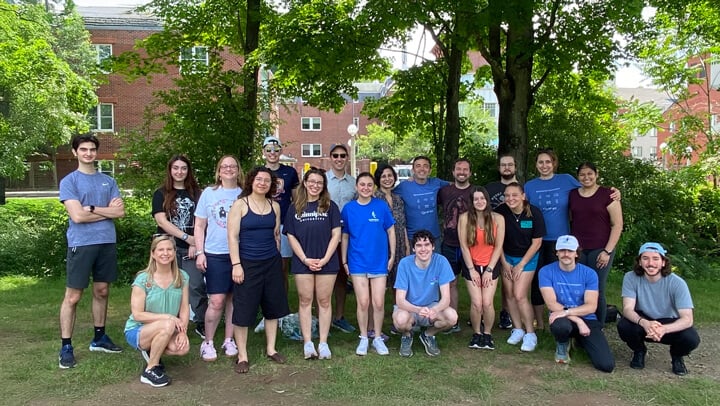
From May to July of 2025, 15 students representing six different schools at Quinnipiac (the the College of Arts & Sciences, the School of Business, the School of Computing & Engineering, the School of Communications, the School of Health Sciences, and and the School of Medicine) and 10 majors (Biochemistry, Biology, Biomedical Sciences, Behavioral Neuroscience, Computer Science, Economics, Marketing, Public Relations, Medical Microbiology and Software Engineering) completed research projects alongside 13 faculty mentors. Research topics spanned from studies on Artificial Intelligence, Alzheimer’s Disease, ant communication, Drosophila development, native bumblebee and the effect of social media advocacy on gun violence reform. In addition to their research, students met weekly as a group to discuss their progress and to participate in a variety of activities including clean-up of Valley Service Road in North Haven and sports jamboree day. Participants shared the final results of their work in poster presentations to their peers, family and community during the QUIP-RS symposium, held during Bobcat Weekend in October 2025. Dr. Rich Olson, Professor and Chair of Molecular Biology and Biochemistry at Wesleyan University, presented the keynote talk.
Student Spotlight
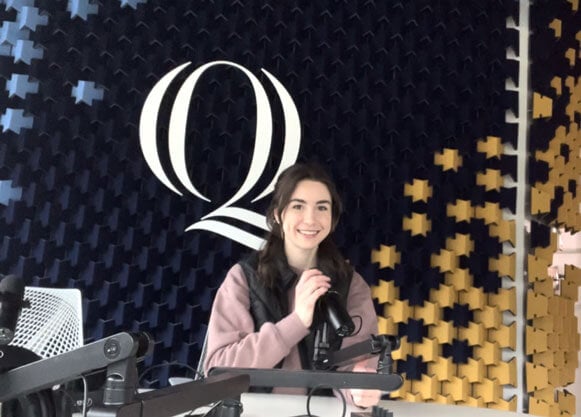
Student discovers passion for science communication through research podcast
March 17, 2025
Leveraging her research experience at Quinnipiac, Teddi Matthews ’24, MS ’25, was inspired to start her podcast, Bobcats with Beakers, leading her to a newfound passion for science communication.
From May to July of 2025, 15 students representing six different schools at Quinnipiac (the the College of Arts & Sciences, the School of Business, the School of Computing & Engineering, the School of Communications, the School of Health Sciences and the School of Medicine) and 10 majors (Biochemistry, Biology, Biomedical Sciences, Behavioral Neuroscience, Computer Science, Economics, Marketing, Public Relations, Medical Microbiology and Software Engineering) completed research projects alongside 13 faculty mentors. Research topics spanned from studies on Artificial Intelligence, Alzheimer’s Disease, ant communication, Drosophila development, native bumblebee and the effect of social media advocacy on gun violence reform. In addition to their research, students met weekly as a group to discuss their progress and to participate in a variety of activities including clean-up of Valley Service Road in North Haven and sports jamboree day. Participants shared the final results of their work in poster presentations to their peers, family and community during the QUIP-RS symposium, held during Bobcat Weekend in October 2025. Dr. Rich Olson, Professor and Chair of Molecular Biology and Biochemistry at Wesleyan University, presented the keynote talk.
Student
Project
Major
School
Mentor
Colby Muse ’26
Survival of the Frugalist: Understanding Worldwide Food Waste
Marketing
School of Business
Tilottama Ghosh Chowdhury
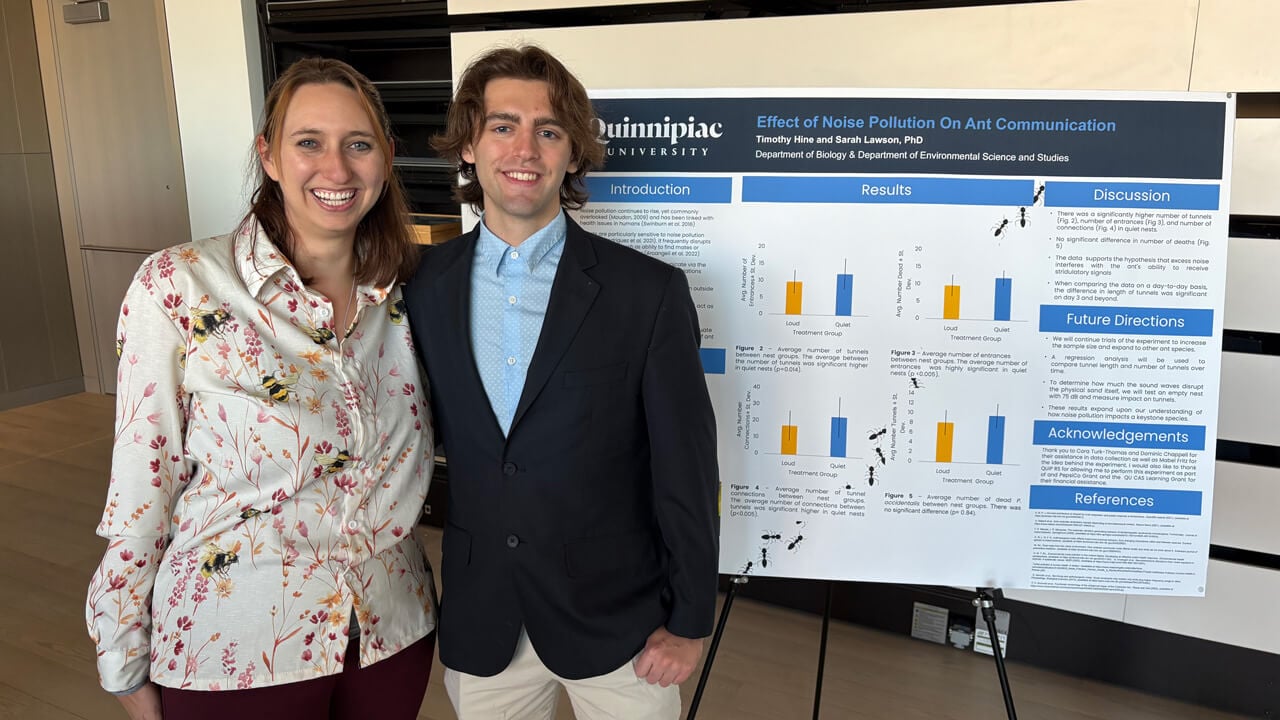
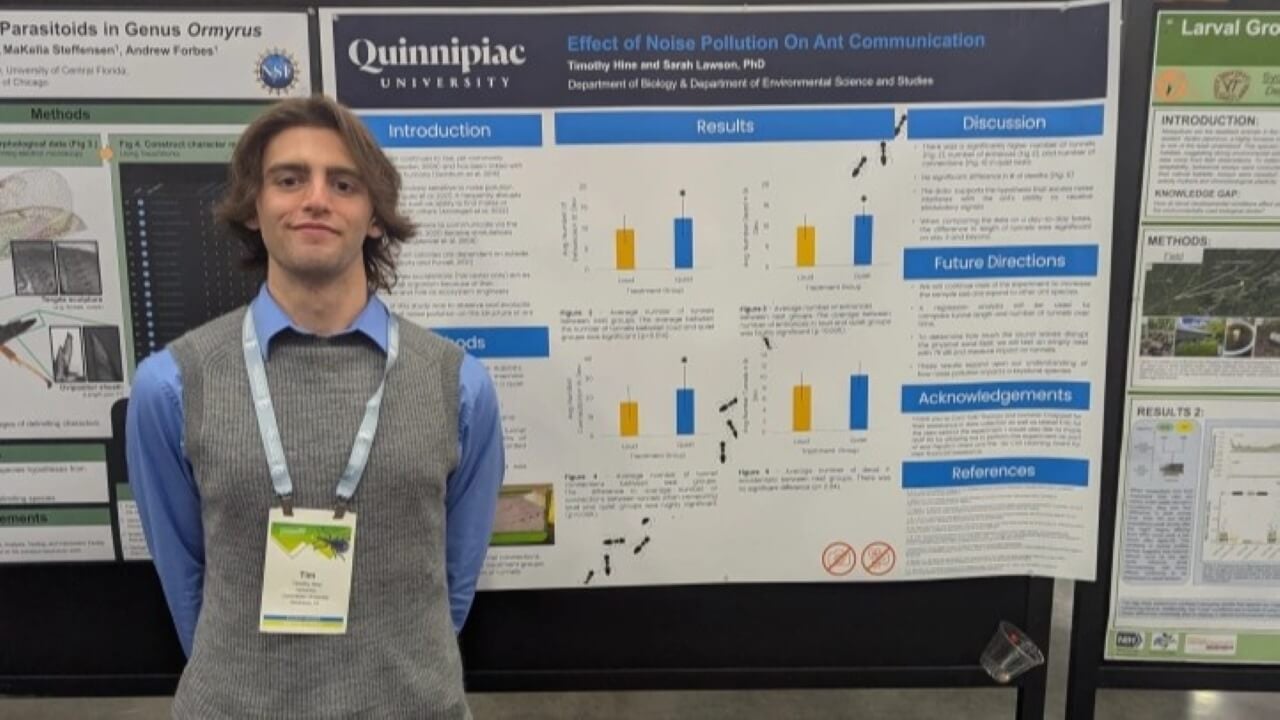
Timothy Hine ’26
Effect of Urban Noise on Ant Communities
Biology
College of Arts & Sciences
Sarah Lawson
Christopher Falcone ’28
A.I. For the Visually Impaired: Real-Time Object Detection with YOLO and Grounding DINO
Computer Science
School of Computing & Engineering
Kruti Shah & Chetan Jaiswal
Giana DiLemme ’26
From Hashtags to Legislation: The Impact of Social Media Advocacy on Gun Violence Reform
Media and Public Relations
School of Communications, College of Arts & Sciences
Katie Place & Candice Travis
Jenna Visich ’27
Investigating Brain Development via RNA-Seq Using ADNP Mutant Zebrafish
Medical Microbiology
School of Health Sciences, School of Medicine
Paul Wolujewicz & Carter Takacs
Julia Mathews and Payton Sack ’26
Investigating the Effects of a Double-Hit Developmental Stress Model on Behavioral, Physiological and Microglial Outcomes
Behavioral Neuroscience
College of Arts & Sciences
Adrienne Betz
Sarita Nagesar ’26
Knockdown of Lgr4 and CCAP-R GPCRs to Assess Cell Migration in Germ Cells and Salivary Glands of Embryonic Drosophila melanogaster
Biology
College of Arts & Sciences
Caitlin Hanlon
Elena Hogan-Perez ’26
Finding ways to help give more representation to artists and entrepreneurs who are most affected by the digital divide
Economics
School of Business
David Tomczyk
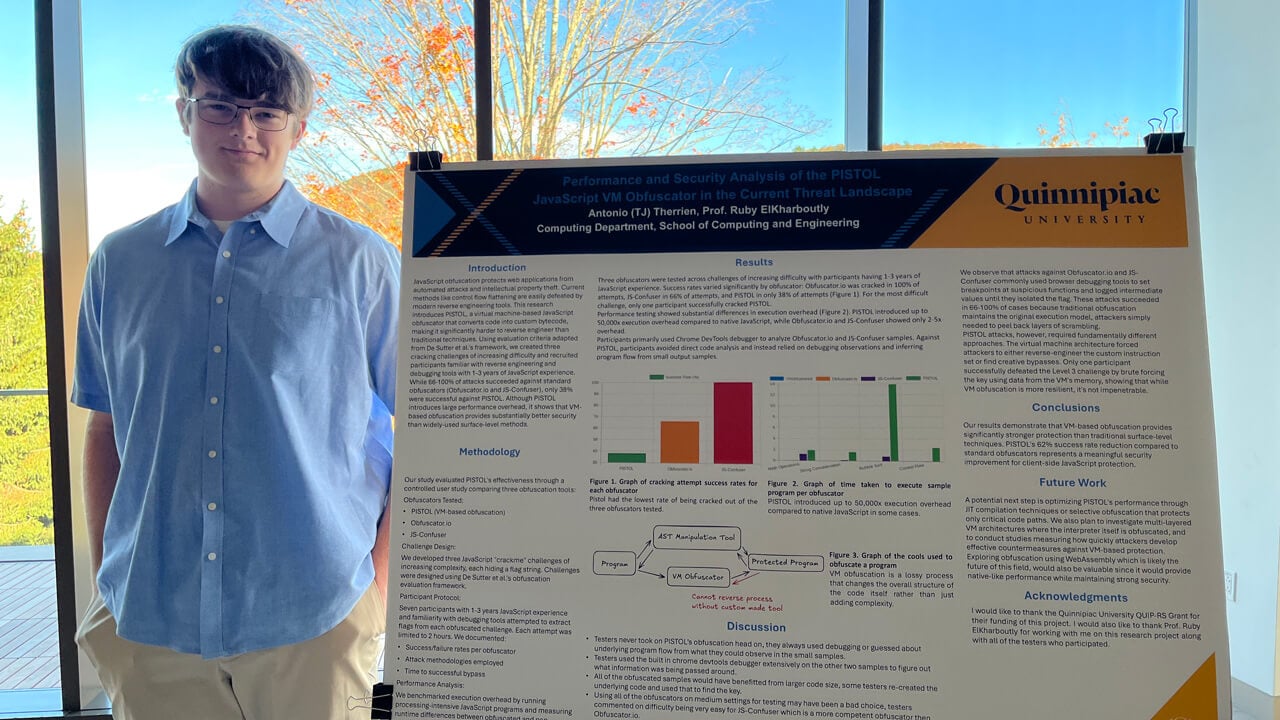
Antonio (TJ) Therrien ’26
Performance and Security Analysis of the PISTOL JavaScript VM Obfuscator in the Current Threat Landscape
Software Engineering
School of Computing & Engineering
Ruby ElKharboutly
Alexander Whitney ’26
Effect of tau on expression and aggregation of Aβ in C. elegans models of Alzheimer’s disease
Biomedical Sciences
School of Health Sciences, College of Arts & Sciences
Alexandre de Lencastre
MD Fayed Salim ’26
customAIze: AI driven image customization
Software Engineering
School of Computing & Engineering
Kruti Shah & Chetan Jaiswal
Jesse Matijevic ’26
Investigating Genomic Assembly of Borrelia Burgdorferi in both Ixodes Scapularis Vectors and Cultured Pathogen Samples
Biochemistry
School of Health Sciences
Paul Wolujewicz
Dominic Chappell ’26
Increasing Habitat Suitability and Connectivity for the Native Bumblebee
Biology
College of Arts & Sciences
Sarah Lawson
Awards and External Presentations
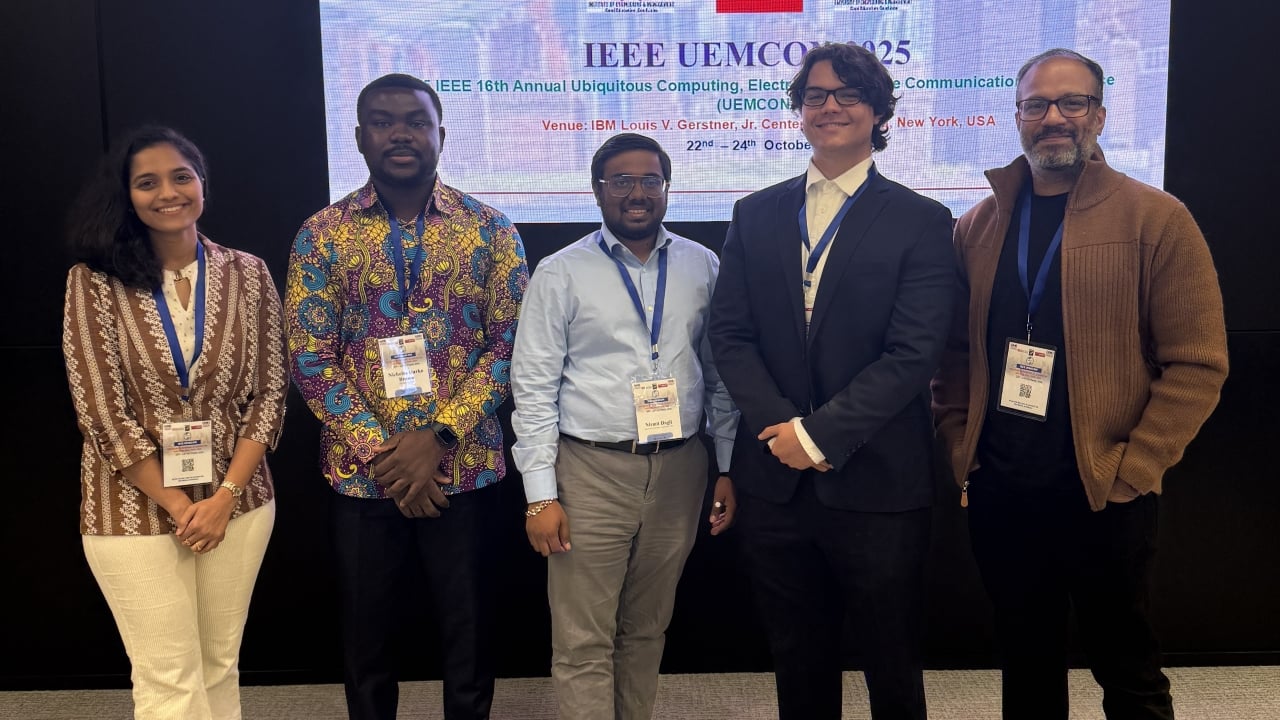
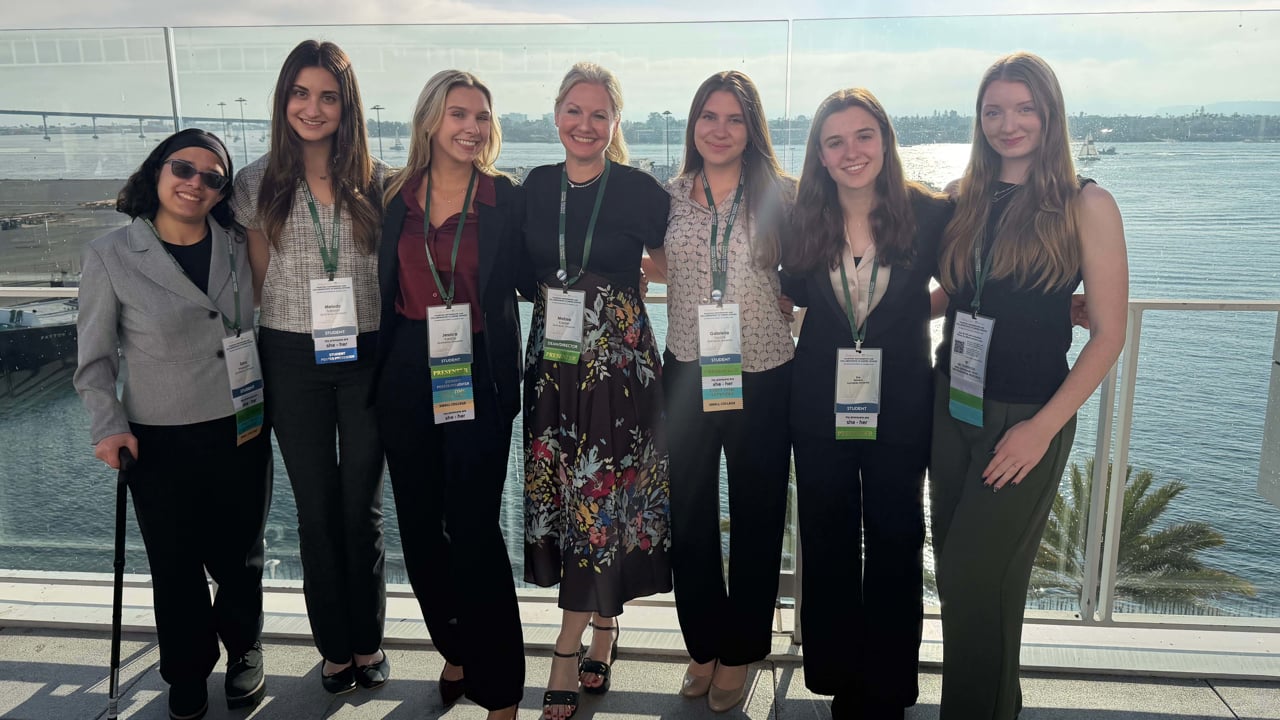
QUIP-RS participants regularly showcase their research at conferences throughout the country. In 2025, four students had the opportunity to travel and present their work, contributing to scholarly dialogue nationwide.
Christopher Falcone ’28 and MD Fayed Salim ’27 presented the poster, "Eye-Assist: Real-Time Visual Assistance for The Visually Impaired," at the IEEE UEMCON 2025 conference in Armonk, NY from October 22-24, 2025 with faculty mentors Kruti Shah, assistant professor of software engineering, and Chetan Jaiswal, associate professor of computer science.
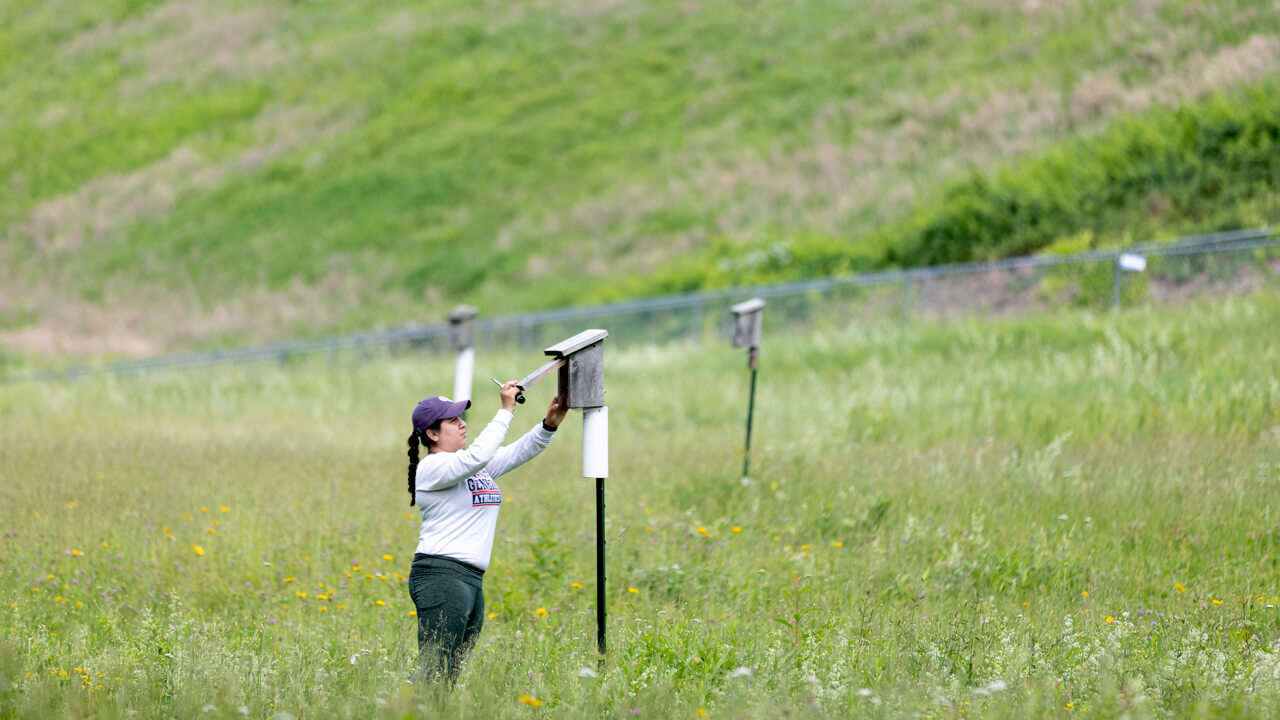
Timothy Hine ’26 presented the poster, "Effect of Noise Pollution on Ant Communication," and won second place in the undergraduate Systematics, Evolution, & Biodiversity (SysEB) category at the International Entomological Society of America conference from November 9-12 in Portland, OR with faculty mentor Sarah Lawson, associate professor of biology.
Julie Mathews ’26 presented the poster, "Maternal Separation Alters Occludin and JAK/STAT3 Expression in the Meninges of Female Rodents," at the Society for Neuroscience in San Diego, California from November 15-19, 2025 with faculty mentor Adrienne Betz, professor of psychology.
Christopher Falcone ’28 and MD Fayed Salim ’26 presented a poster at the IEEE UEMCON 2025 conference.
Timothy Hine ’26 presented a poster at the International Entomological Society of America conference.
From May to July of 2024, 15 students representing five different schools at Quinnipiac (the Schools of Computing & Engineering, Communications, Health Sciences, and Business, and the College of Arts & Sciences) and 10 majors (advertising, biology, communication, engineering, international business, microbiology, neurobiology, political science, public relations) completed research projects alongside 17 faculty mentors. Research topics spanned from studies on Artificial Intelligence, non-coding RNAs on Alzheimer’s Disease, the color preferences of native pollinators, the Political Extremism and online radicalization. In addition to their research, students met weekly as a group to discuss their progress and to participate in a variety of activities including clean-up of Valley service road in North Haven and sports jamboree day. Participants shared the final results of their work in poster presentations to more than 500 community members during the QUIP-RS symposium, part of the Exploratorium held during Bobcat Weekend.
Investigating the Influence of miRNA-71 on tir-1 Expression and Aβ Aggregation in C. elegans Models of Alzheimer’s Disease
Biomedical Sciences
College of Arts and Sciences
Alex de Lencastre
Award Winners
* Andrew Fiocco ’26 was awarded Best Undergraduate Presentation in the chemistry category at IFoRE (International Forum on Research Excellence), hosted by Sigma Xi in Washington, D.C. from November 14-17, 2024.
^ Sana Quadri ’26 was the only undergraduate student invited to present in a competitive session at the Academy of International Business U.S. Northeast Chapter 2024 Annual Conference in Boston from October 4-5, 2024.
** Hailey Tolson ’25 presented her research at the American Society of Cell Biology (ASCB) meeting that was hosted in San Diego, CA from December 14-18, 2024.
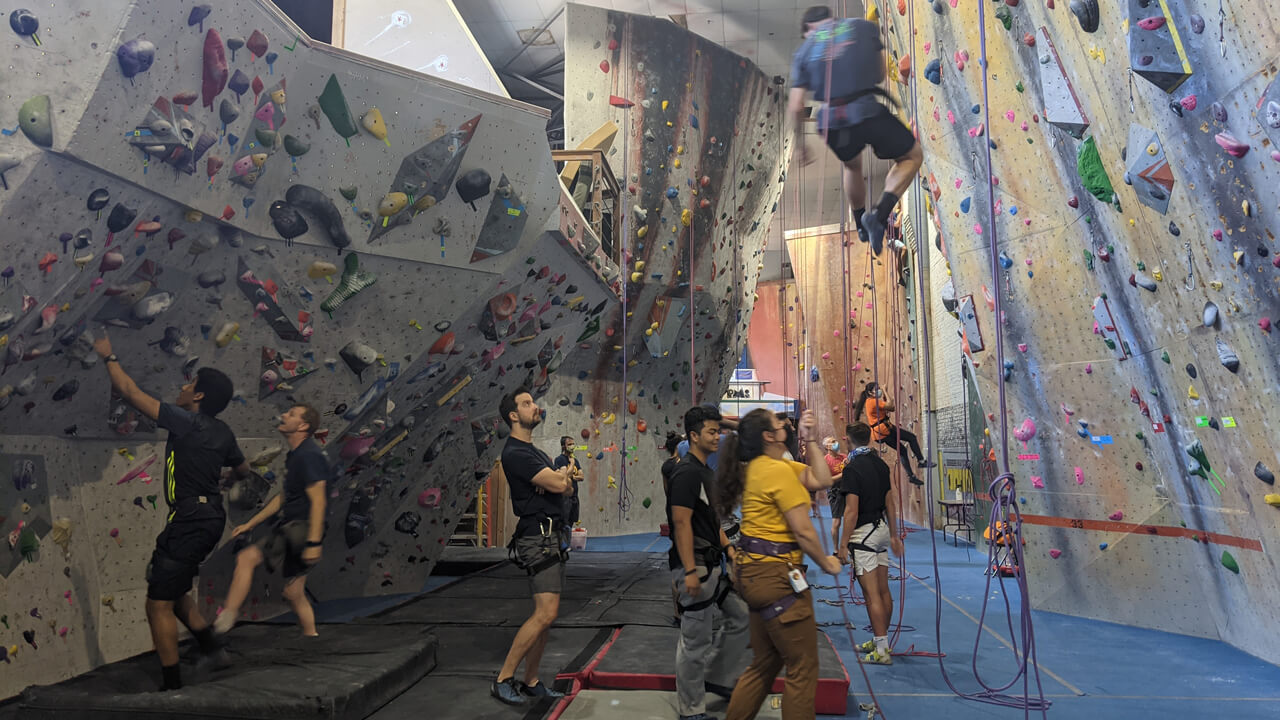
From May to July of 2023, 14 students representing four different schools and 11 unique majors completed research projects alongside their faculty mentors. Research topics spanned from a studies on Artificial Intelligence, to the impact of pollinator gardens and studies on transgender representation in films and TV. In addition to their research, students met weekly as a group to discuss their progress and to participate in a variety of activities from hiking Sleeping Giant to a sports jamboree day and rock climbing. Participants shared the final results of their work in poster presentations to more than 500 community members during the QUIP-RS symposium, part of the inaugural Exploratorium held during Bobcat Weekend.
Student
Project
Major
School
Mentor
Vlora Alka ’24
The effects of acute exercise on working and recognition memory
Biomedical Science and Sociology
School of Health Sciences
Alyssa Arends ’24
Queer temporality, citizenship & the Rohingya genocide
Political Science and History
College of Arts and Sciences
Larissa Pitts, Nita Prasad and Marcos Scauso
Julia Bock ’26
AI for All: Investigating the presence of pore-clogging ingredients within skincare and beauty products using artificial intelligence
Computer Science
School of Computing and Engineering
Chetan Jaiswal
Alina Filandro ’25
The impact of pollinator gardens on pollinator diversity and density
Biology
College of Arts and Sciences
Sarah Lawson
Mackenzie Guthrie ’24
Assessing the role of compost and road salt on heavy metal retention from roadside bioswales.
Civil Engineering
School of Computing and Engineering
John Greenleaf and Kimberly DiGiovanni
Madisyn King ’24
Cognition and Music Preference: Listening that impacts our emotion
Health Science Studies
School of Health Sciences
Jonathan Torres
Aamnah Malik ’25
POLY AI: Polyglot analysis using artificial intelligence
Computer Science
School of Computing and Engineering
Chetan Jaiswal
Teddi Matthews ’24
Characterizing the promoter of the late phage operon ΦBB-1, a bacteriophage of Borrelia burgdorferi
Biomedical Sciences
School of Health Sciences
Christian Eggers
Emina Metjahic ’24
Effort-choice behaviors as the result of early life adversity characterized by maternal separation
Behavioral Neursocience
College of Arts and Sciences
Adrienne Betz and Joshua Haight
Finn Meyer ’26
Film, Television and Media: Transgender representation on screen and its real-world effects
Film, Television and Media Studies
School of Communications
Katie Place
Jenelle Miller ’24
Early life stress as a model of anhedonia in rodent models using effort-choice testing
Behavioral Neursocience
College of Arts and Sciences
Joshua Haight and Adrienne Betz
Amari O'Connor ’24
Social Change Through Media: What does representation mean to you?
Game Design and Theater
College of Arts and Sciences
Abigail Copeland and Jonah Warren
Ryan Sliger ’26
FRIL: Facial feature recognition and implementation for focused learning
Computer Science
School of Computing and Engineering
Chetan Jaiswal
Nicole Wijendra ’26
Investigation of the impacts of physical and chemical properties of soil on NO flux in suburban soils from South Central CT
Biochemistry
College of Arts and Sciences
Robert Hanson
From May to July of 2022, 13 students representing five different schools and 10 unique majors completed research projects alongside their faculty mentors. Research topics spanned from a study of the connection between anxiety and learning in adolescent rats to an exploration of how societies respond to plagues throughout history and a calculation for how social media influencers impact impulse buying.
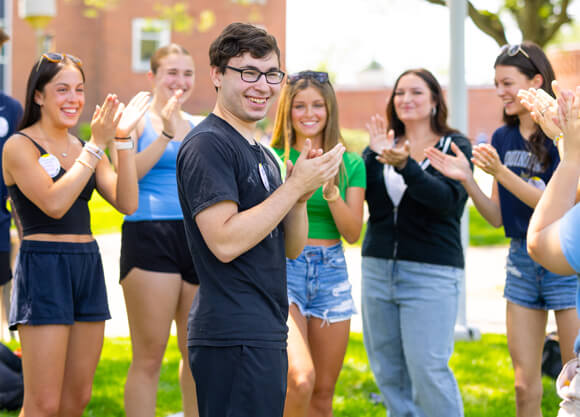
In addition to their research, students met weekly as a group to discuss their progress and to participate in a variety of activities from planting a pollinator garden to a sports jamboree day and rock climbing. The program concluded with the QUIP-RS symposium during Bobcat weekend when all participants shared the final results of their work in poster presentations to the community. Beyond Quinnipiac, students also presented their research at regional and national meetings and won awards for their excellence in research.
Award Winners
Yamna Siddiqui ’23 was awarded the 1st Place Research Award at the REMC Symposium at Netter Medical School for her research poster in September 2022.
Hannah Jack ’24 presented her research at the Society for Neuroscience Conference in Washington D.C. from November 11-15, 2022.
Kushi Agnish ’22 was the only undergraduate invited to give a talk on her QUIP-RS research at the Academy of International Business Conference, held at American University on October 15, 2022.
Riya Miller ’23 was invited to give a talk at Hopkins School on her research in November 2022.
Kelsey Darcy ’23 presented her research on college athletes’ use of social media in the wake of NCAA name, image and likeness policy changes at the International Public Relations Research Conference (IPRRC) in Orlando, Florida in March 2023. She was one of the only undergraduate students accepted to present.
Student
Project
Major
School
Mentor
Khushi Agnish ’22
How do social media influencers impact impulse buying?
Behavioral Neuroscience
College of Arts and Sciences
Tilottama Chowhury and Mohammed Elahee
Alyssa Arends ’24
Citizenship in Myanmar: The mapping of difference
Political Science
College of Arts and Sciences
Marcos Scauso and Melissa Kaplan
Emily Beltz ’22
Developmental transitions during Coxiella burnetii infection
Biomedical Sciences
School of Health Sciences
Shawna Reed
Vareeon (Pam) Chonweerawong ’23
Investigating horizontal gene transfer in Lyme Disease vector Borrelia
Microbiology & Immunology
School of Health Sciences
Christian Eggers
Kelsey Darcy ’23
Name, Image and Likeness: roles and value for the college athlete
Public Relations
School of Communications
Katie Place
Emily Diaz ’24
Mapuche Resistance: decolonizing histories
Political Science
College of Arts and Sciences
Jonathan Torres
Hannah Jack ’24
Anxiety, learning, and memory deficits in adolescent rats
Behavioral Neuroscience
College of Arts and Sciences
Adrienne Betz
Ariel Khemraj ’24
The development of electrolytic electroporation for the treatment of skin lesions
Mechanical Engineering
School of Computing and Engineering
Mary Phillips Ho
Olivia Magno ’23
Investigation of triflouroacetic acid in C. elegans
Biology
College of Arts and Sciences
Courtney McGinnis
Riya Miller ’23
Investigating the role of biogenic amines in the formation of dominance hierarchies in the subsocial small carpenter bee Ceratina calcarata
Biology
College of Arts and Sciences
Sarah Lawson
Briana-Frankie Morganstern ’23
How society has learned to live through plagues
History
College of Arts and Sciences
Jill Fehleison
Yamna Siddiqui ’23
MicroRNA regulation of splicing homeostasis and longevity in C. elegans
Biomedical Sciences
School of Health Sciences
Alexandre de Lencastre
Hannah Williams ’22
Effects of artificial noise on the parental care of tree swallows
Biology
College of Arts and Sciences
Scott Davies
Student
Project
Major
School
Mentor
John Arceta ’22
Role of the paraventricular nucleus of the thalamus (PVT)
Behavioral Neuroscience
College of Arts and Sciences
Joshua Haight
Connor Becerril ’22
Investigating PCBs in the Mill River
Civil Engineering
School of Computing and Engineering
Kimberly DiGiobanni, John Greenleaf and Courtney McGinnis
Dagmawi Bogale ’22
Understanding the correlation between gut microbiota and neuropsychiatric disorders
Biomedical Sciences
School of Health Sciences
Christian Eggers
Jessica Brij-Raj ’23
Examining Streaming Media Habits Among Young Adults
Media Studies
School of Communications
Katie Place
Kamryn Carter ’21
The function of the miRNA miR-71 on mRNA splicing fidelity and its effects on longevity
Biology
College of Arts and Sciences
Alexandre de Lencastre
Gabriella Colello ’22
Pacific Islands Forum & Global Policy
Political Science
College of Arts and Sciences
Marcos Scauso and Hillary Haldane
Sean Dalton ’22
The Glucose Stress Response and Survival in Neonate Birds
Biology
College of Arts and Sciences
Scott Davies
Luke DeSilva ’22
Suburban Neighborhood Water Quality Improvement Test
Civil Engineering
School of Computing and Engineering
John Greenleaf and Kimberly DiGiovanni
Nathan DesRoberts ’22
The New Four P’s: A Marketing Research Study
International Business
School of Business
Tilottama Chowdhury
Thomas Gadacy ’22
Simulation and Data Analytics of Factors Impacting Quinnipiac
Software Engineering
School of Computing and Engineering
Ruby ElKharboutly and Annalisa Zinn
Gina Greco ’22
Learning Shear and Moment Diagrams with Real-Time Feedback
Mechanical Engineering
School of Computing and Engineering
Lynn Byers
Alexandria Pacrin ’22
The Effects of a Second Life Stressor during Peri-Adolescence
Behavioral Neuroscience
College of Arts and Sciences
Adrienne Betz
Taha Siddiqui ’22 and Yamna Siddiqui ’23
Nitric Oxide Fluxes from Suburban Soils
Biomedical Sciences
School of Health Sciences
Robert Hansen
Maxwell Stenslie ’22
The Role of Pollinator Gardens on Native Pollinator Diversity
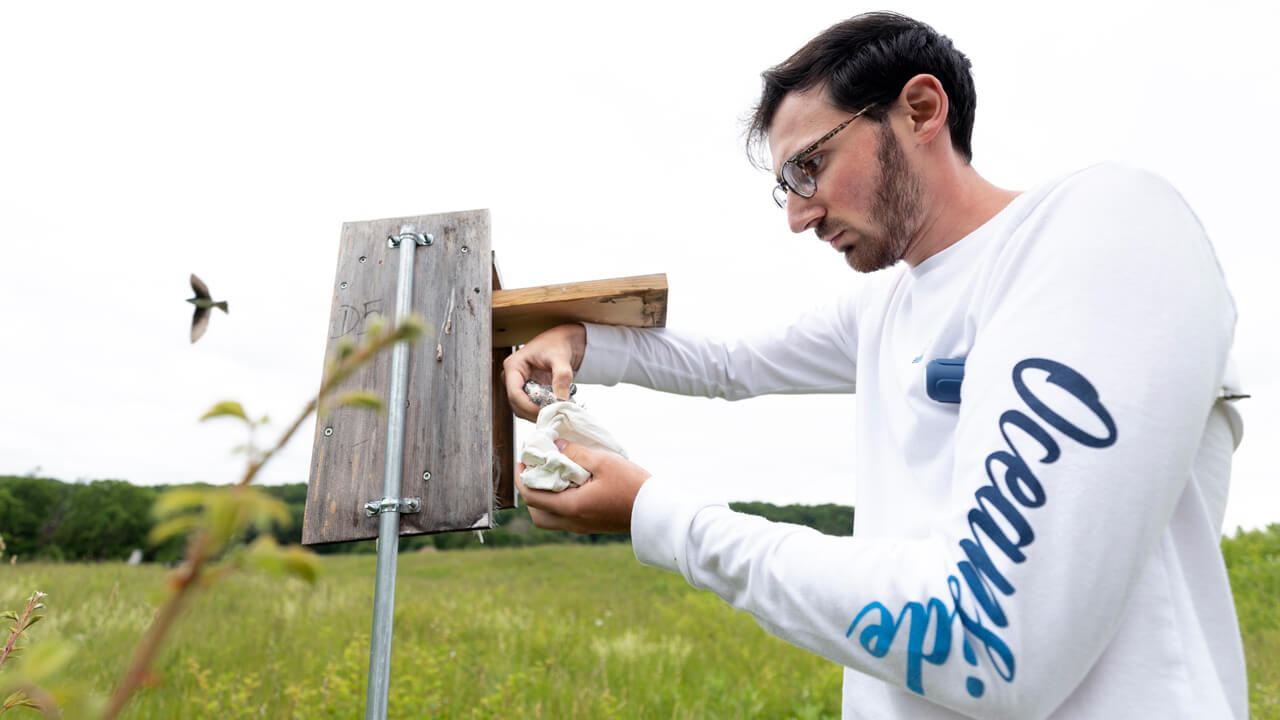
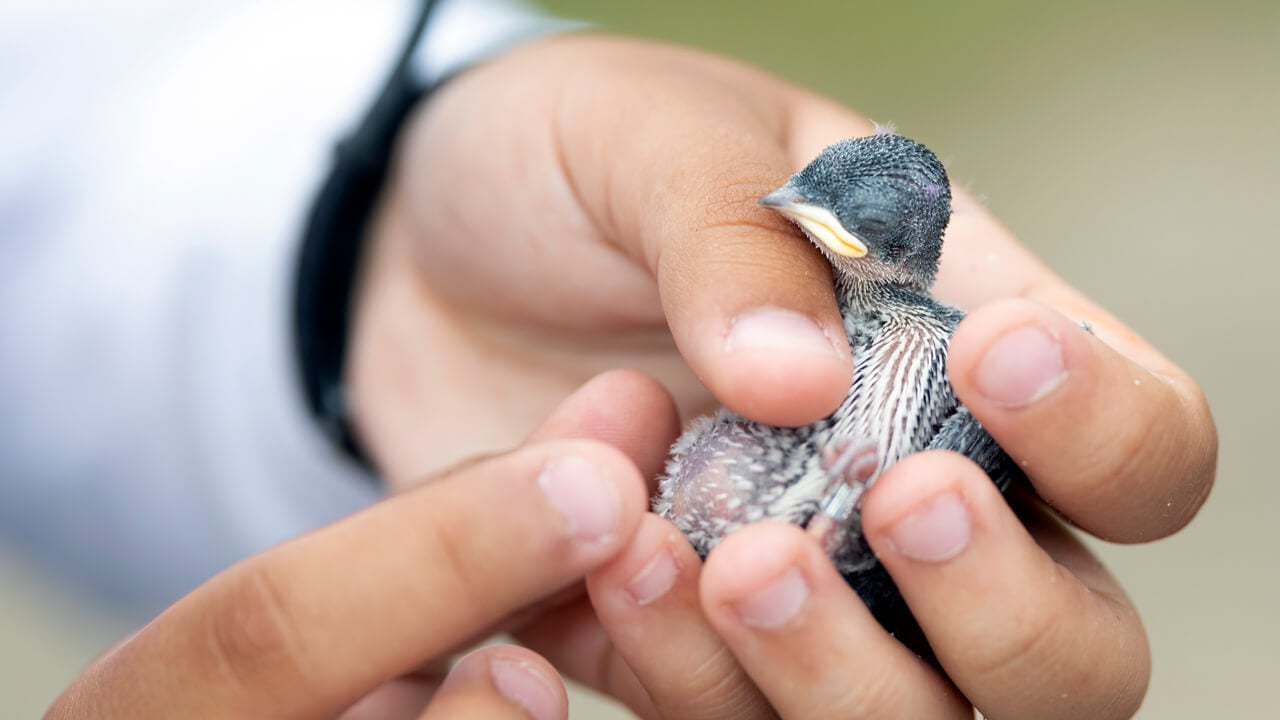
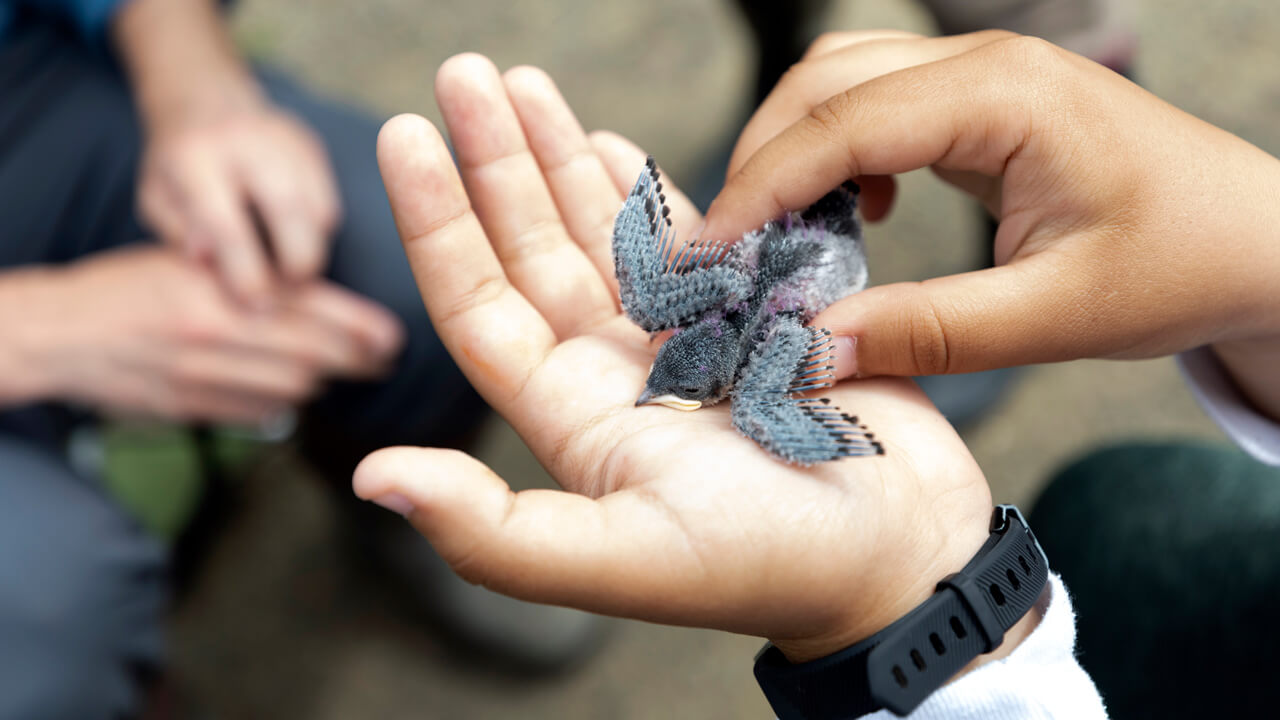
Biology student Joseph Battaglia ’21 handles baby swallows during a fieldwork session at Lake Chamberlain in Bethany, Connecticut.
QUIP-RS 2021 featured 15 students who conducted original research in 14 different projects.
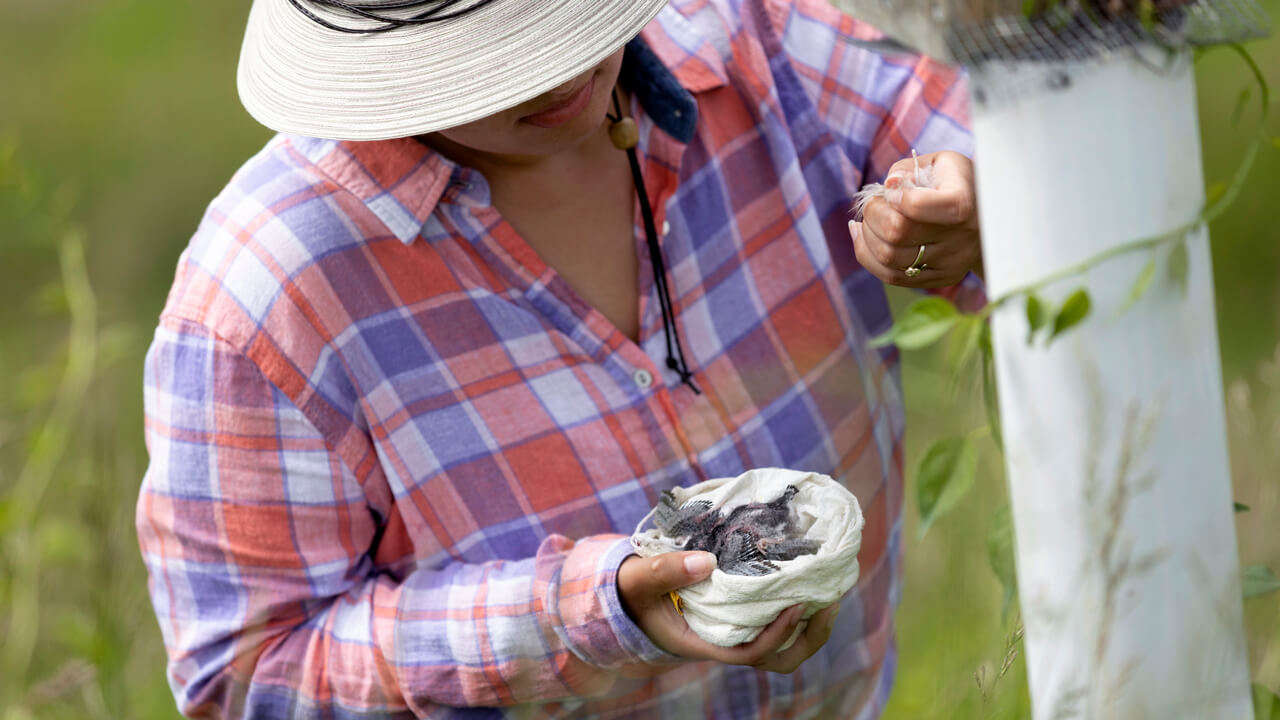
Biology student Arlynn Hernandez ’22 (Q-STEP) retrieves baby swallows during a fieldwork session at Lake Chamberlain in Bethany, Connecticut.
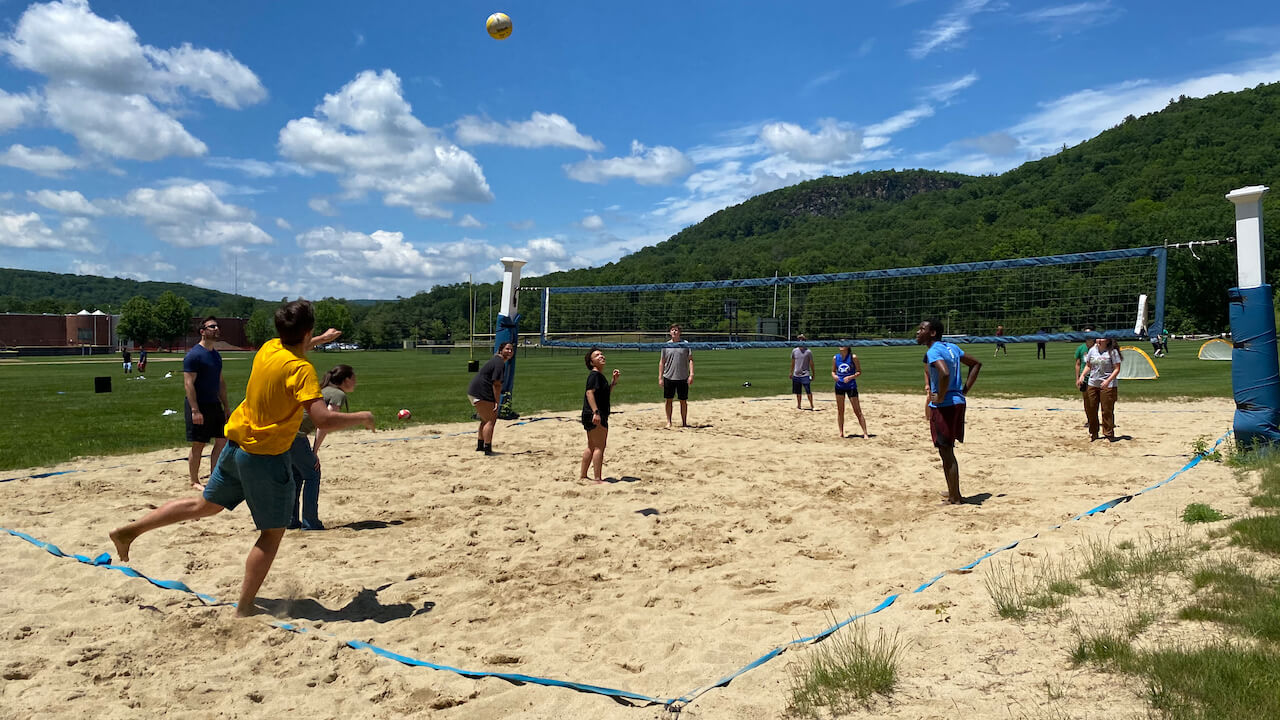
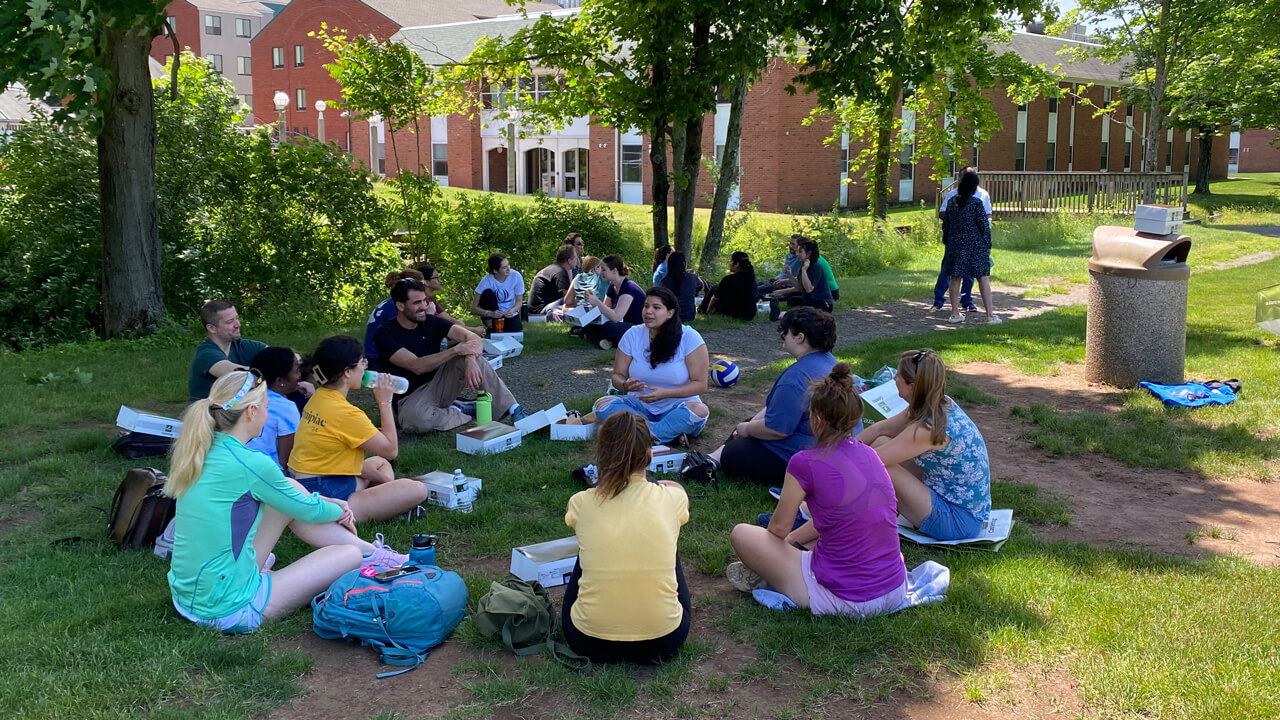
In addition to weekly research meetings students also participate in a variety of activities – including sleeping giant guided hike, sports jamboree day, and rock climbing at Prime Climb in Wallingford.
Biology student Sabrina Escobar ’21 (Q-STEP) retrieves baby swallow eggs during a fieldwork session at Lake Chamberlain in Bethany, Connecticut.
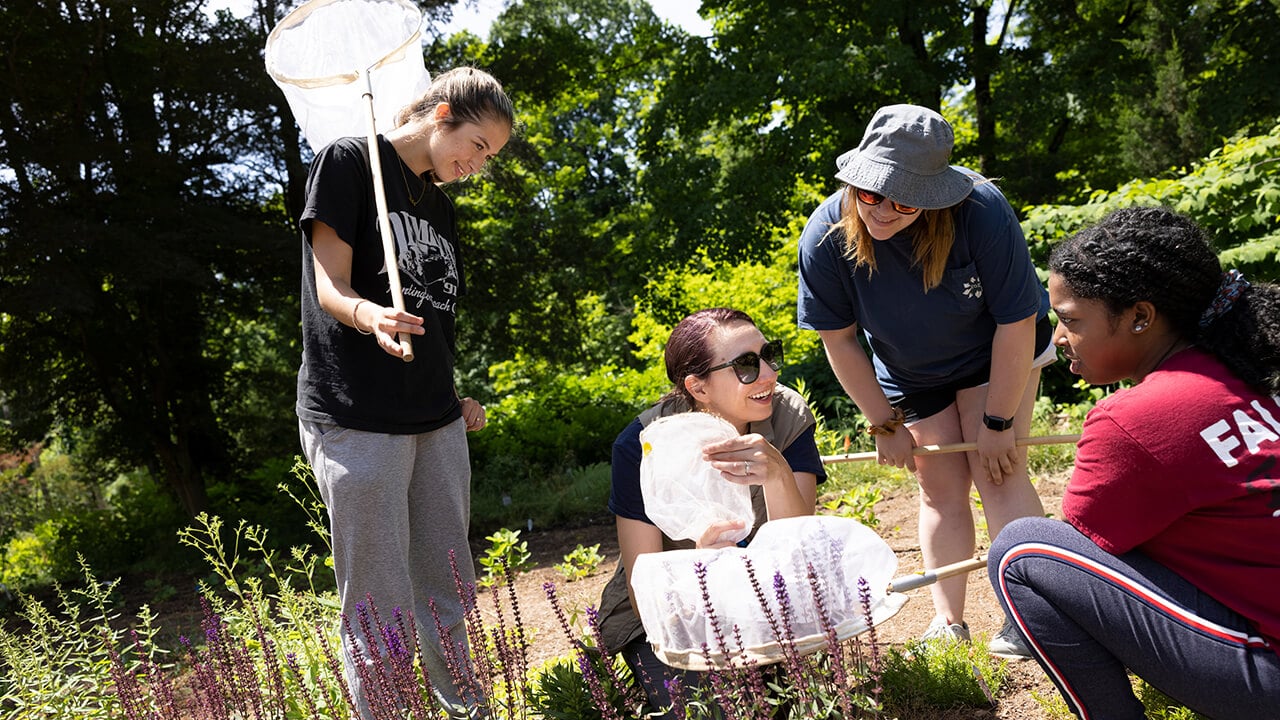
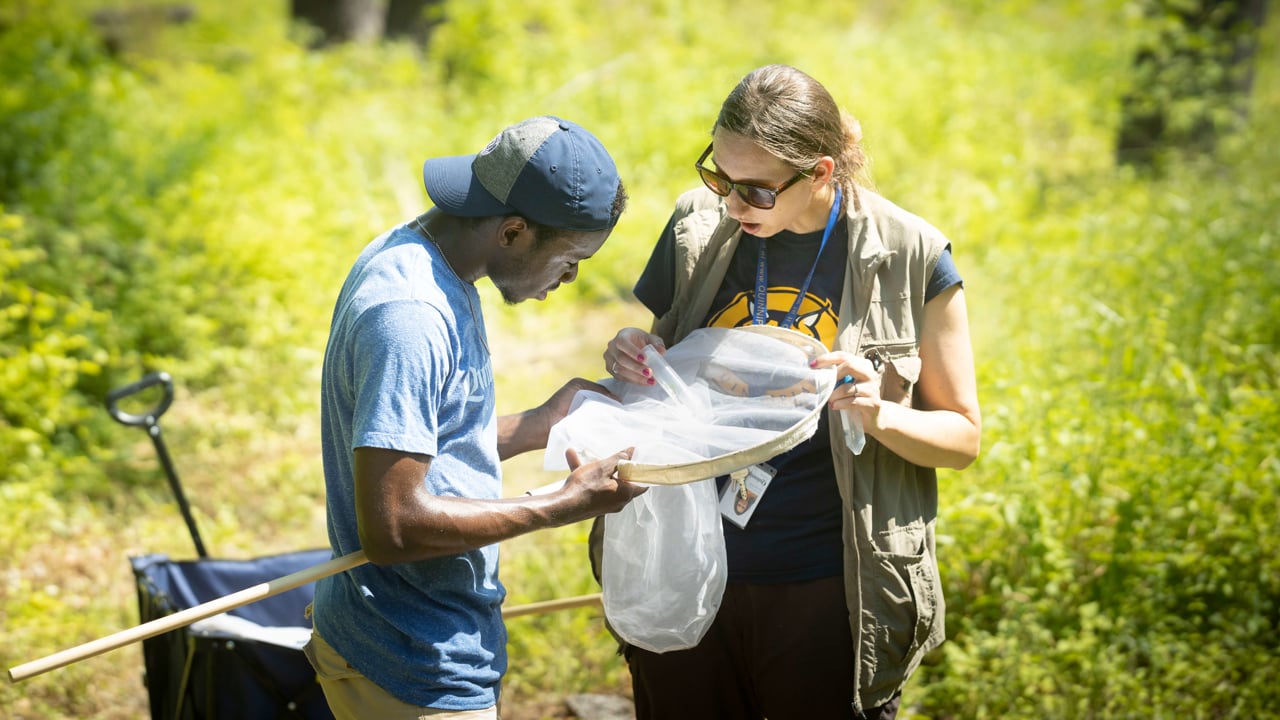
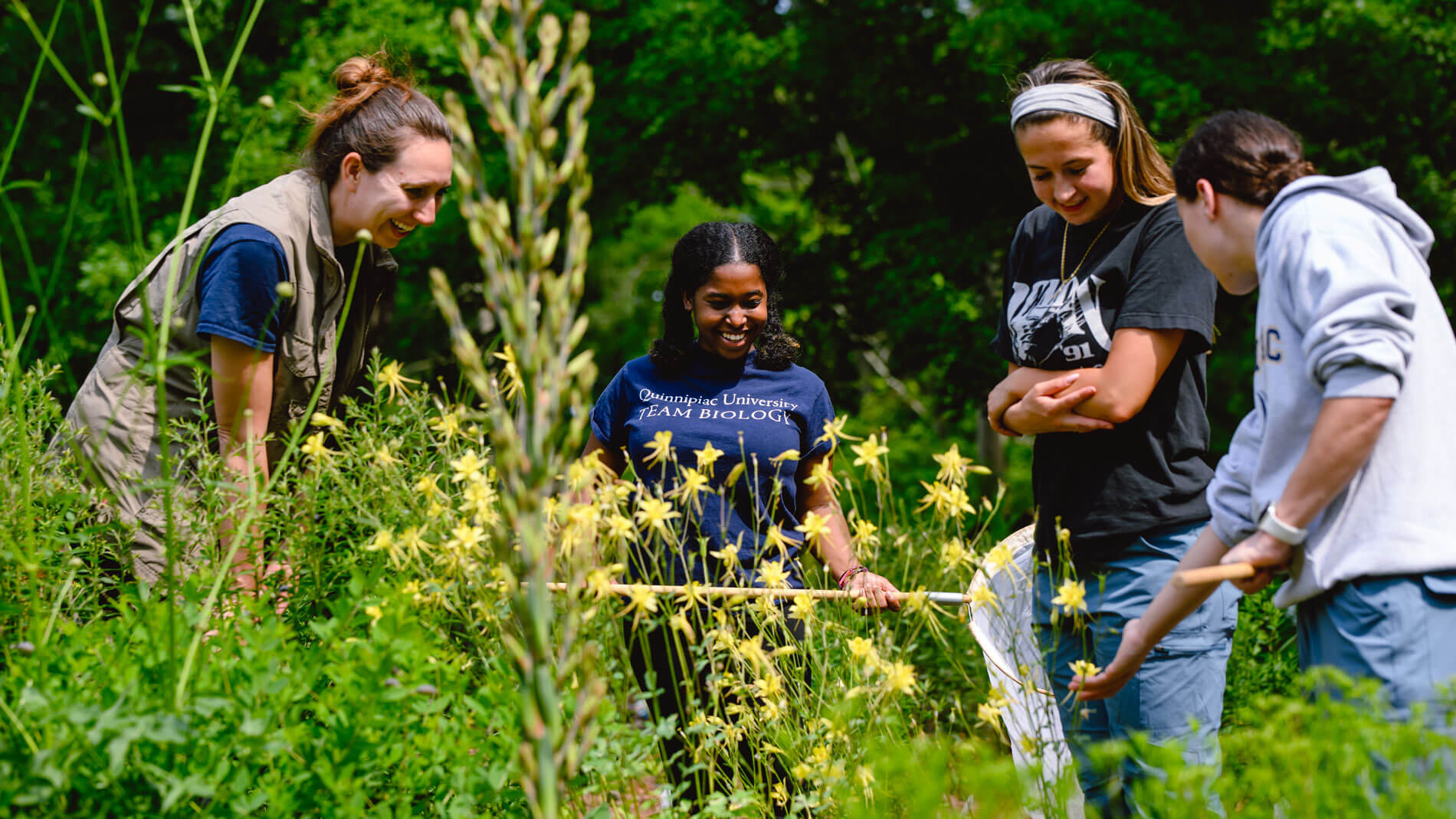
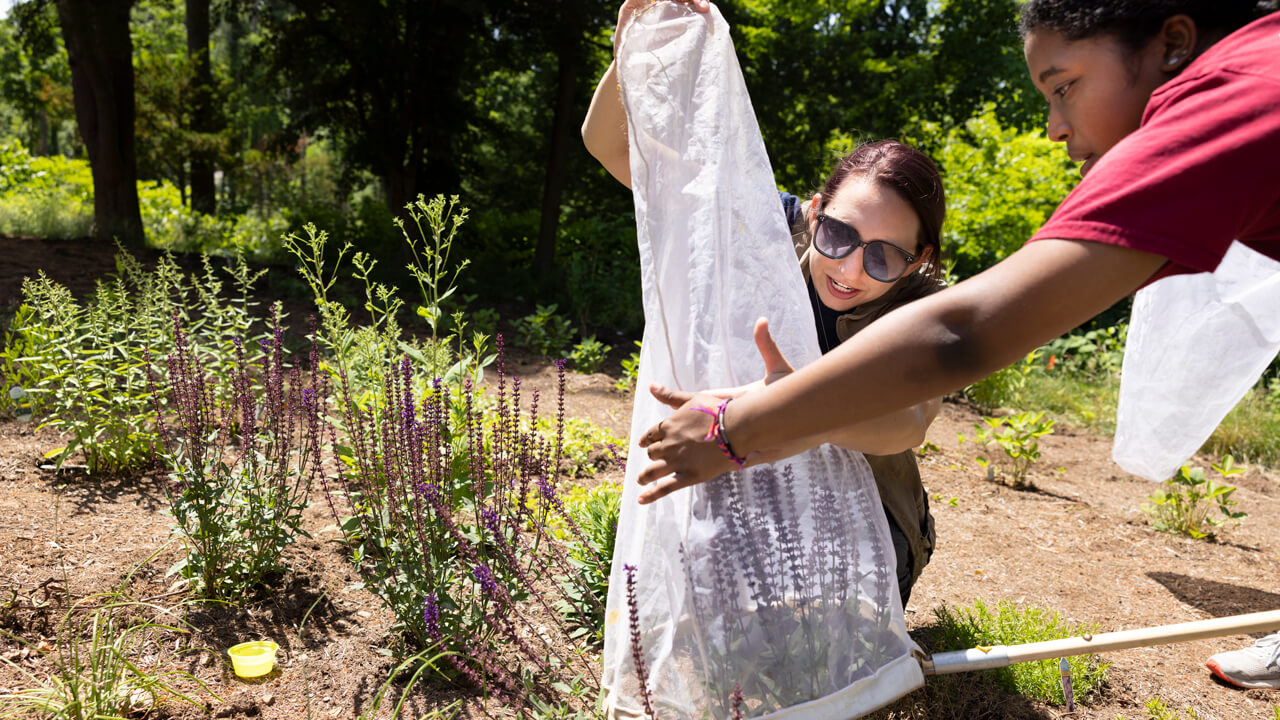
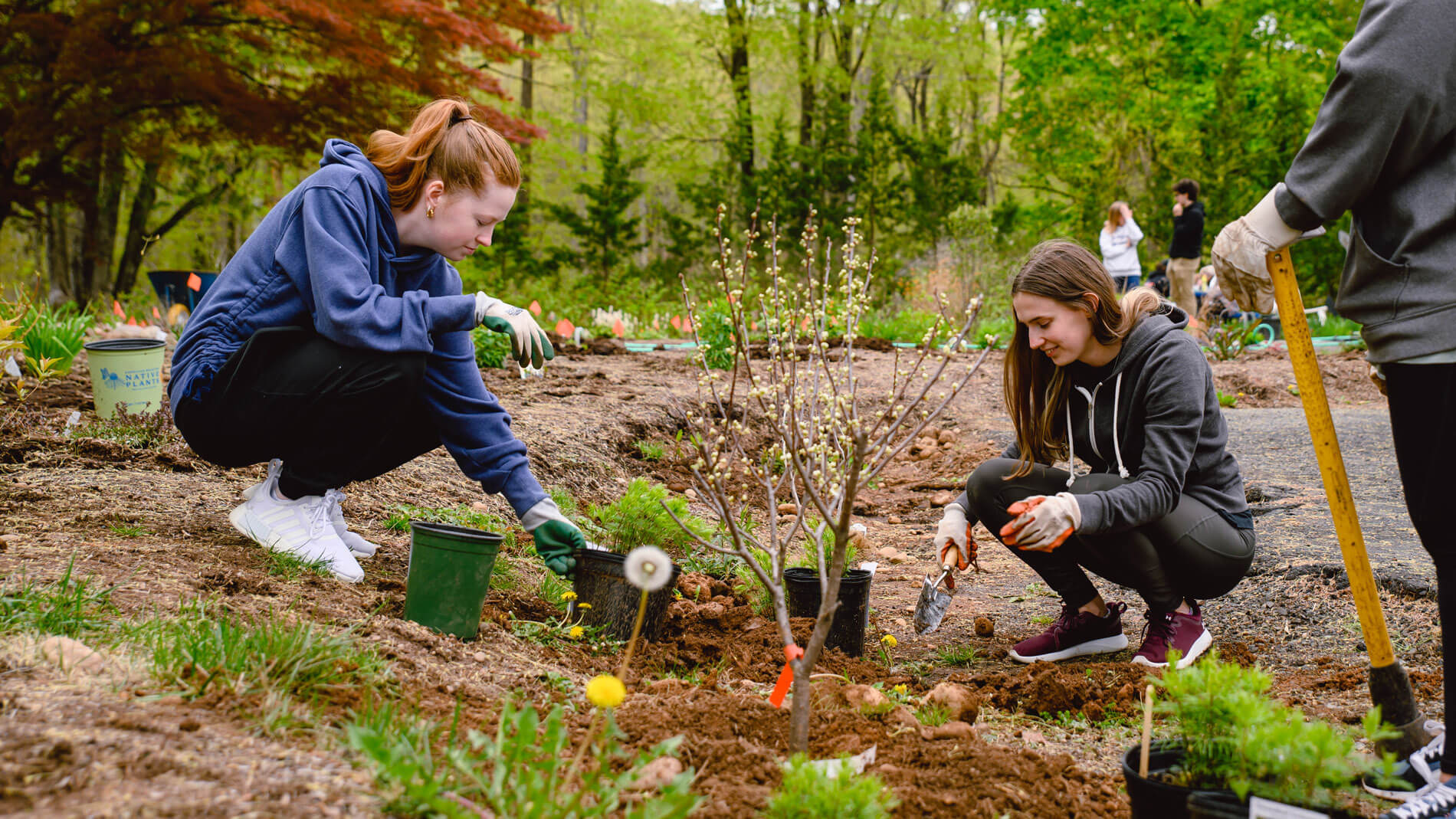
Professor Sarah Lawson has helped establish a pollinator garden on Mount Carmel Campus to invigorate native pollinator biodiversity.
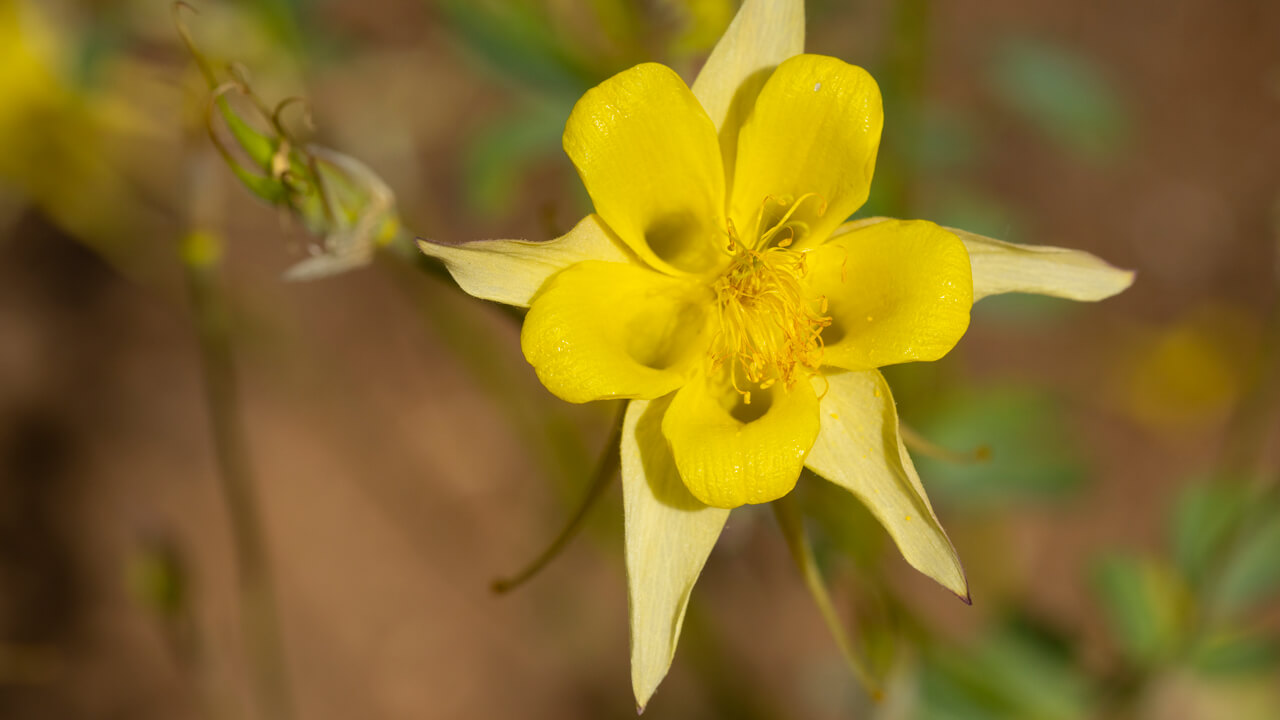
The garden contains eight themed beds hosting 200 varieties of native plants. Plants were chosen to bloom in succession for year-round growth.
The research explores the role of nutrition in shaping the native bee community, the impacts of floral resource availability on foraging habits, and the effects of nutritional availability on pollinator physiology.
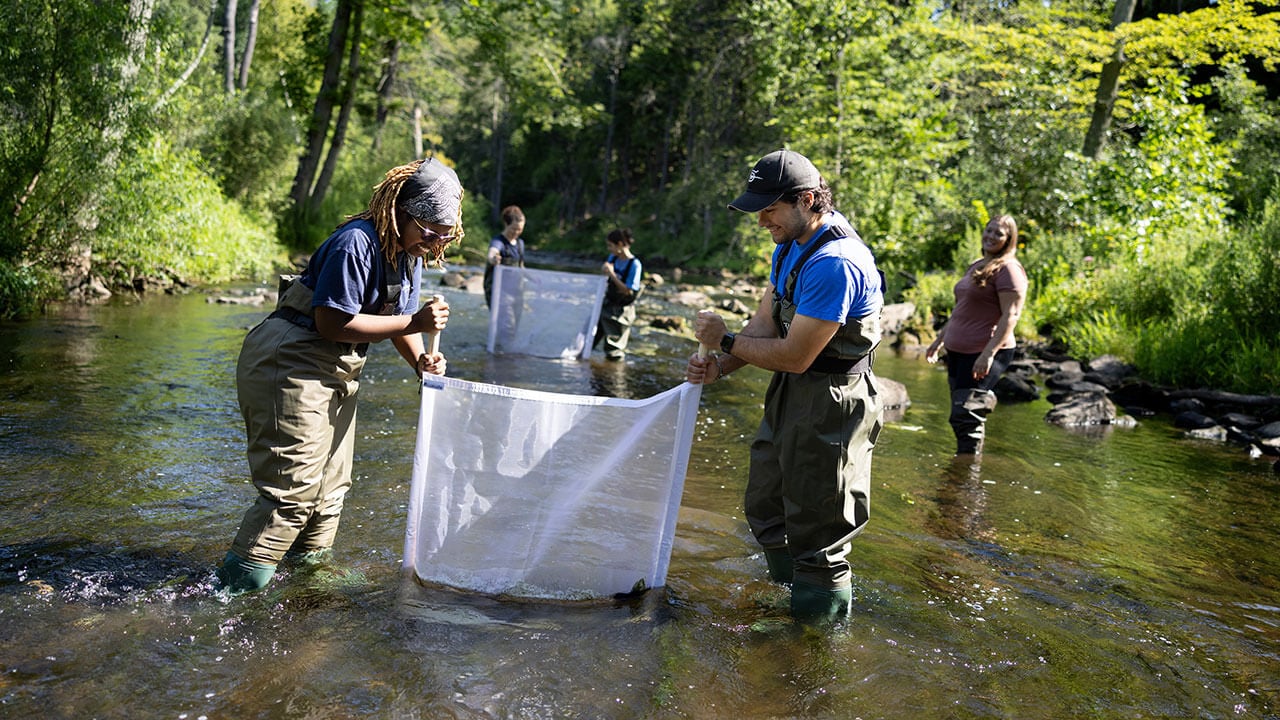
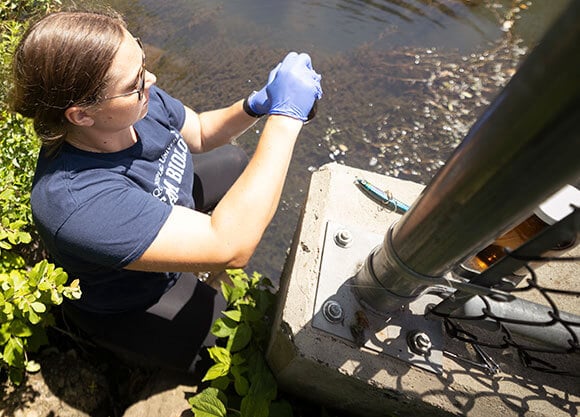
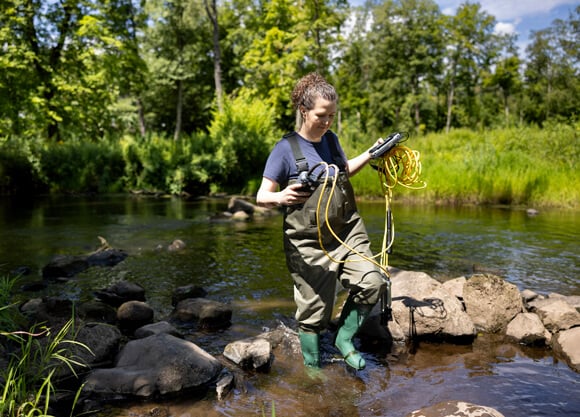
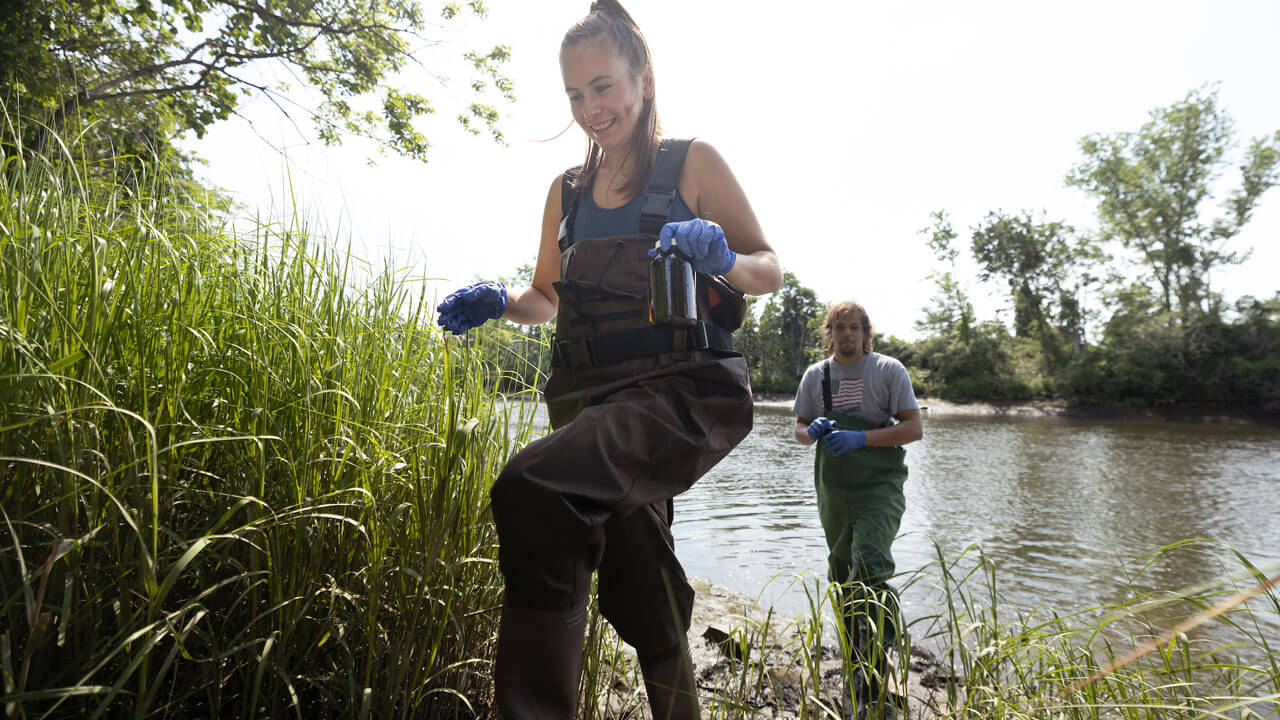
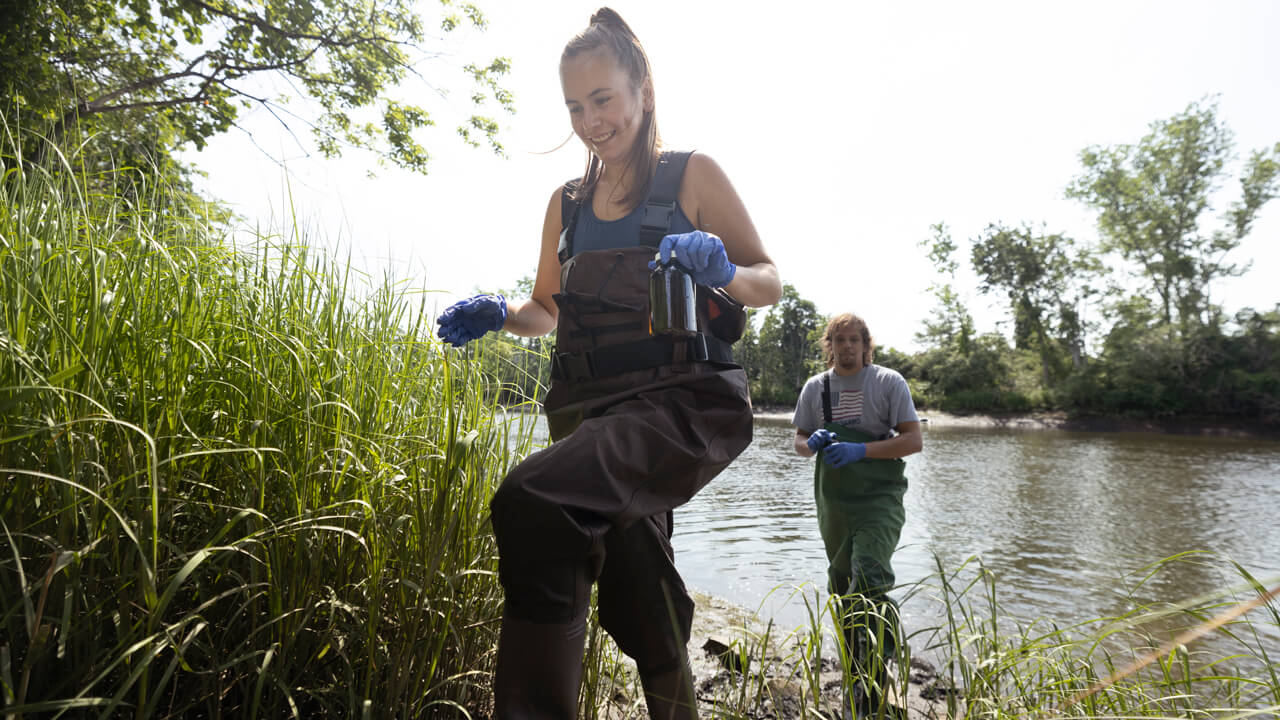
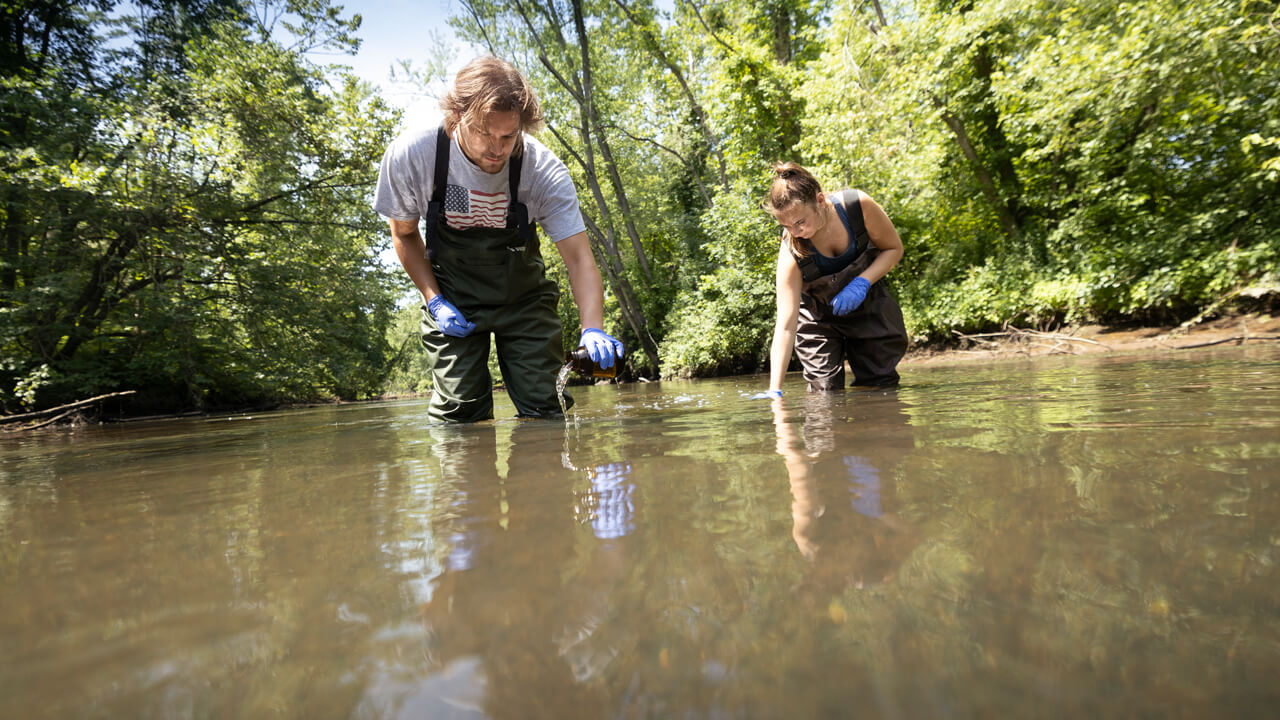
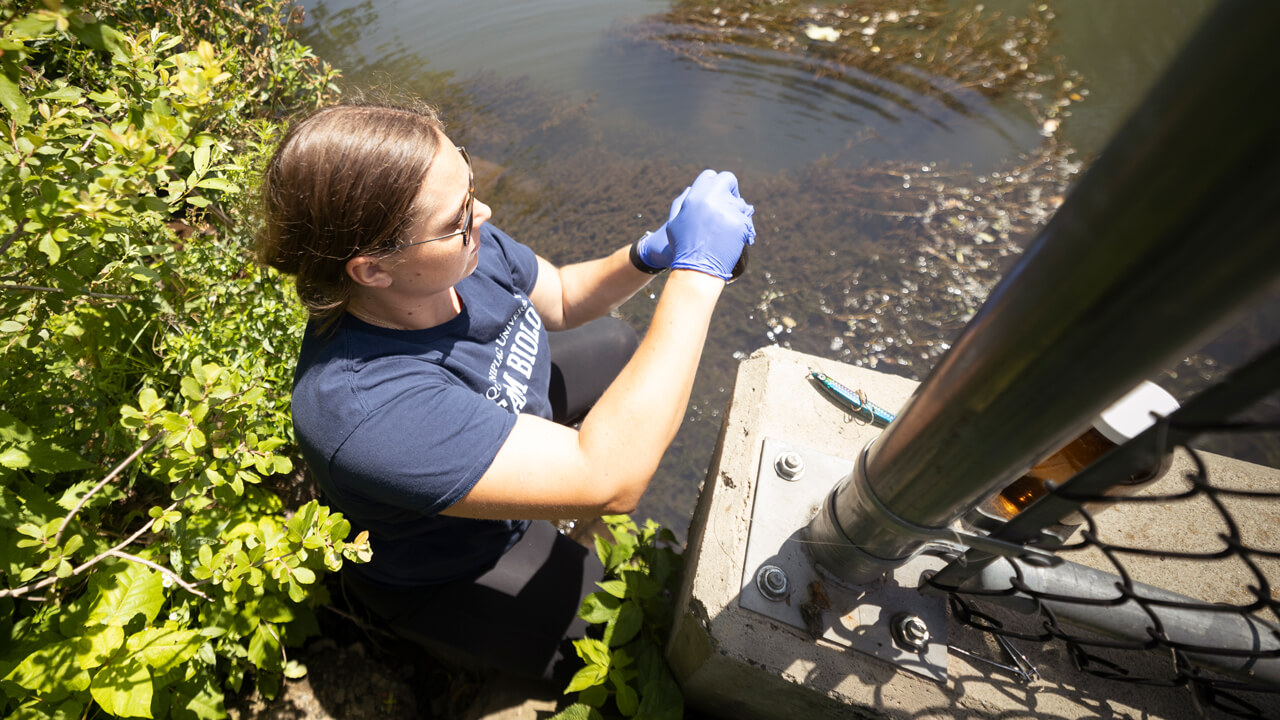
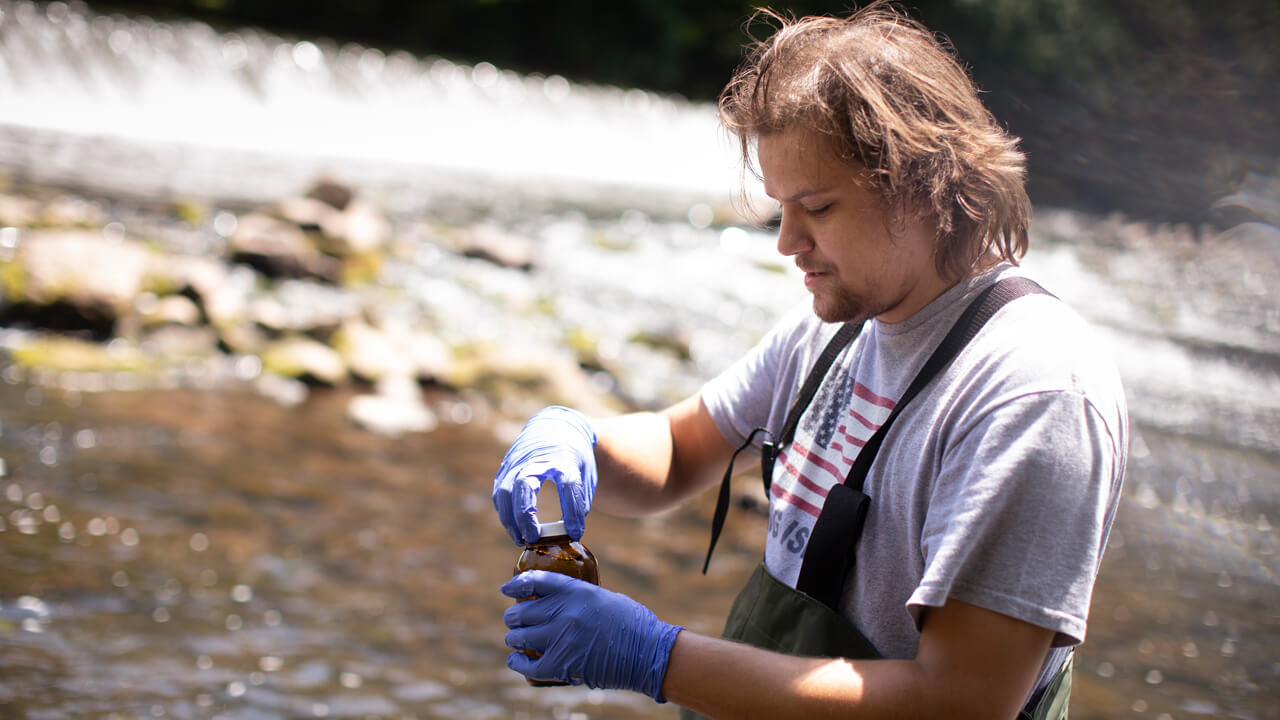
The research project entails collecting water samples from locations in Wallingford, Hamden and North Haven, CT.
The students analyze the samples via gas chromatography-mass spectrophotometry (GC-MS) for the presence of pesticides, phthalates or plasticizers.
The project addresses the need for water-quality monitoring along the Quinnipiac River to inform and support decision-making around actions targeted at water-quality improvement.
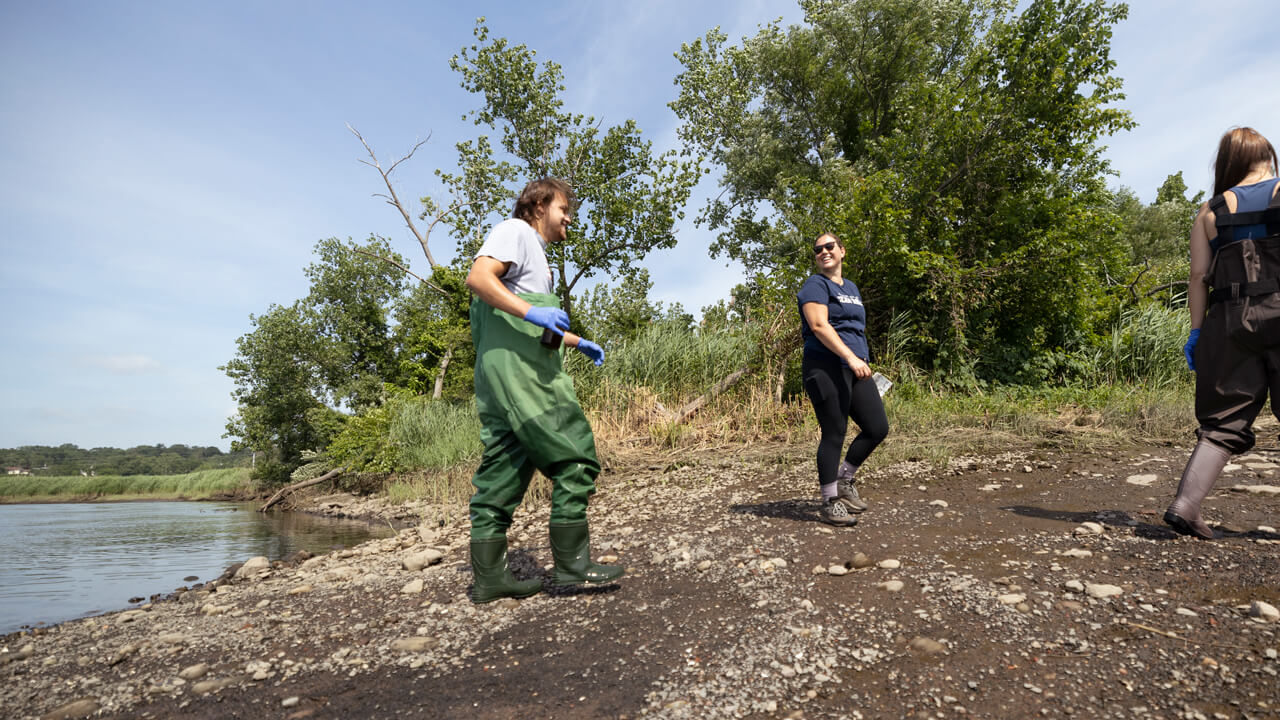
Professor Courtney McGinnis leads river testing with students during the summer in the Quinnipiac River. The lab examines the river by gas chromatography mass spectrophotometry (GC-MS) for the presence of phthalates and plasticizers with external grand support from the Quinnipiac River Foundation.
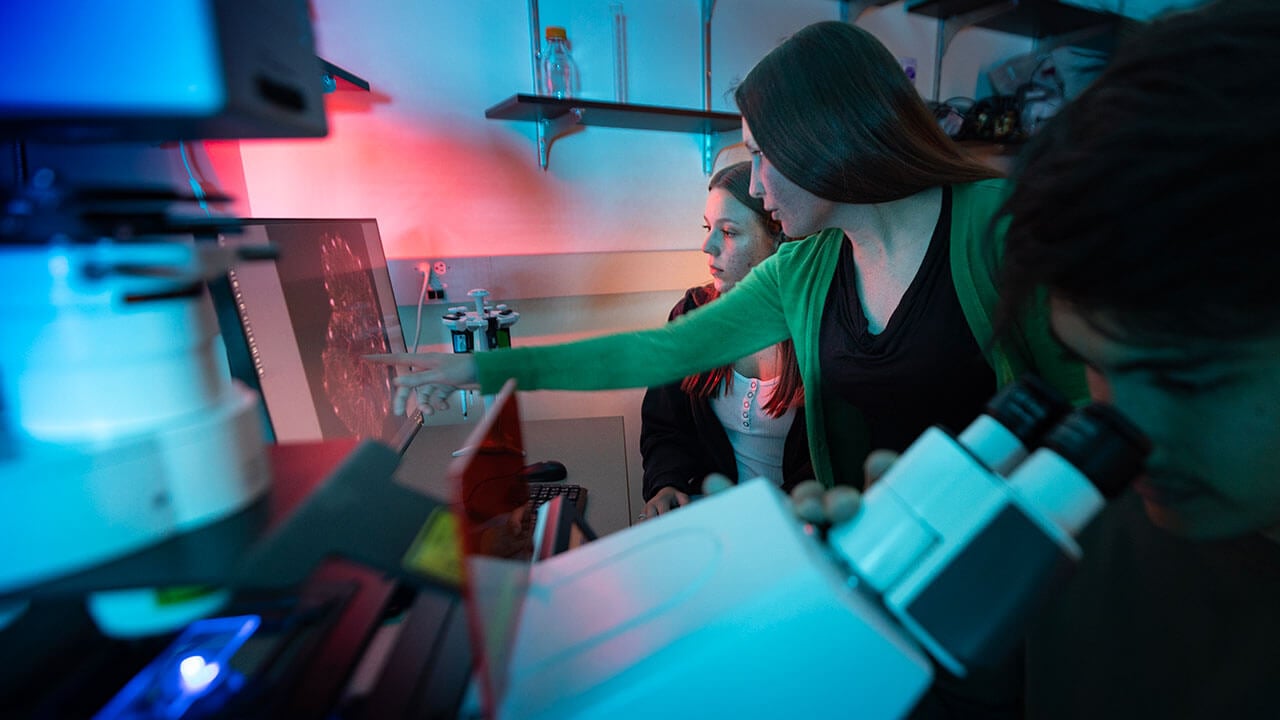
Biology students are involved in all aspects of the research — from collecting samples and preparing them for analysis to analyzing samples via GC-MS and presenting their findings.
QUIP-RS Activities
Social Enrichment
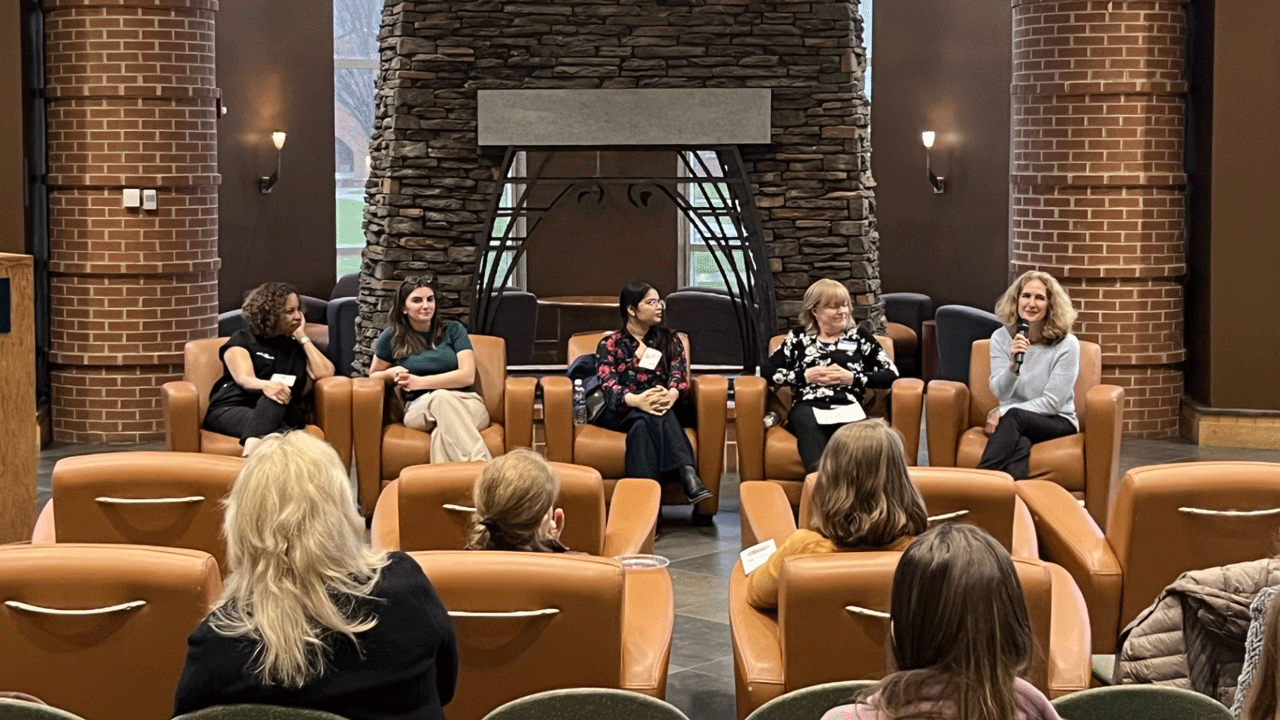
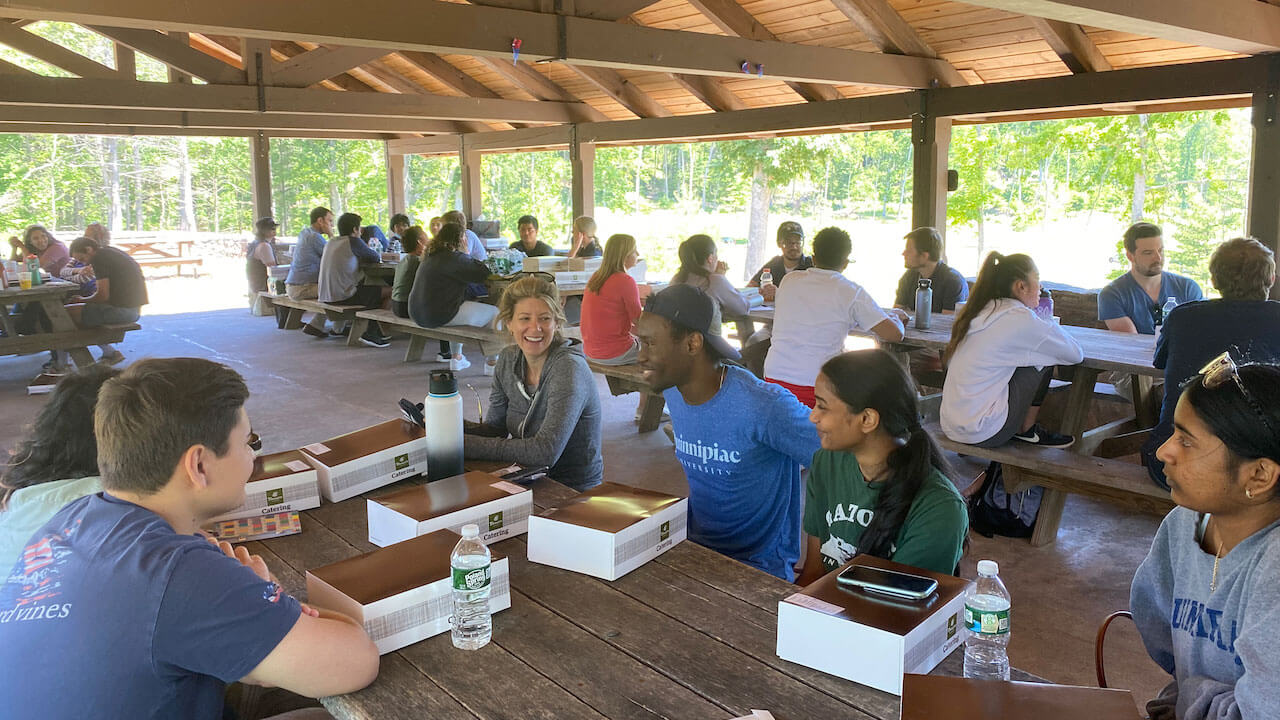
QUIP-RS is open to students from all disciplines at Quinnipiac from computing and technology to business and the humanities. Research experiences are coupled with a high degree of interaction between all faculty and student participants. With opportunities to unwind during hikes, field trips and sporting events alongside career development events like speaker panels, resume workshops and coaching sessions, QUIP-RS provides a rich interdisciplinary foundation that defines what it means to be a lifelong scholar.