

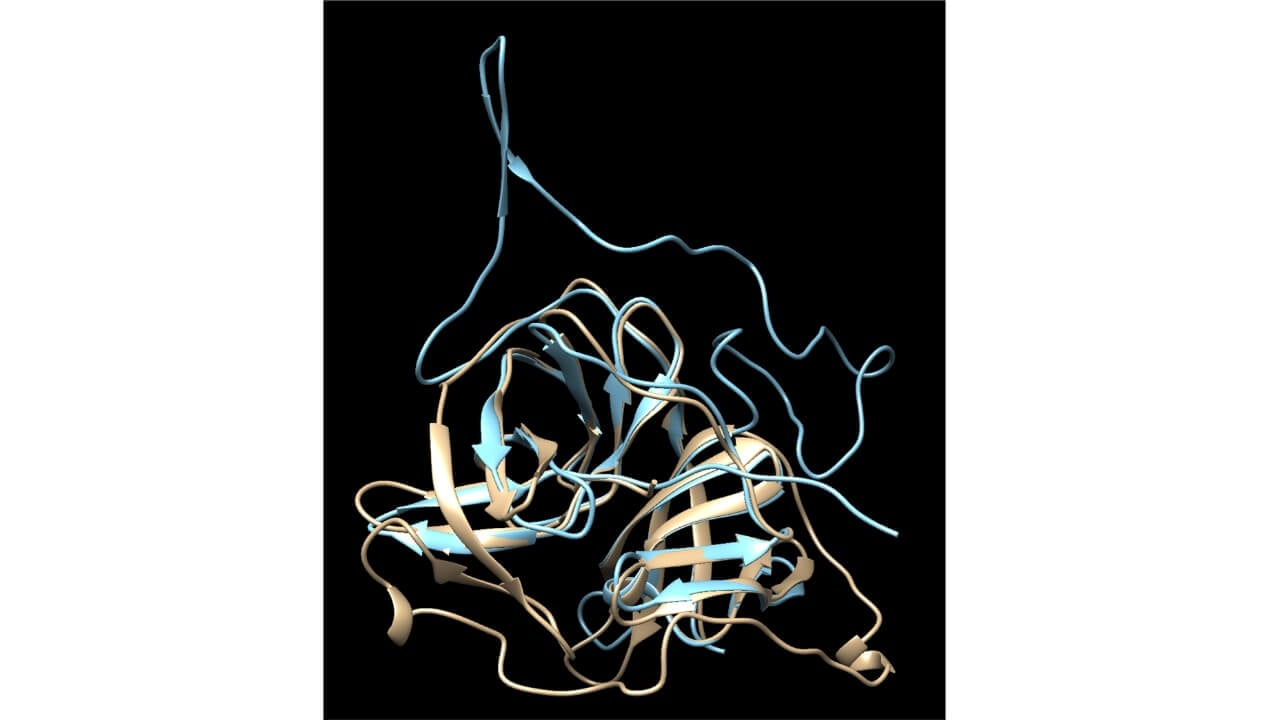
Figure 1. Theoretical structures of NS2B-NS3, showing the open (tan) and closed (blue) conformations of NS2B

Biochemistry
Biochemistry
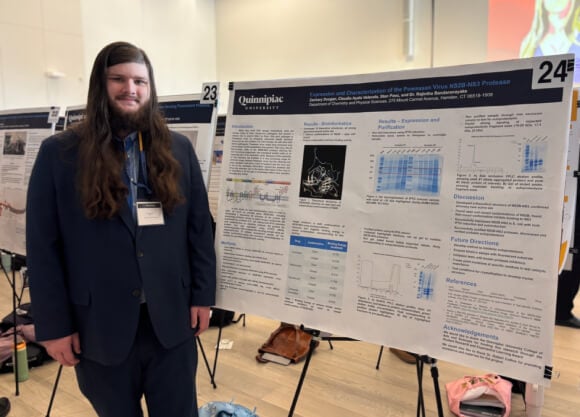
Zachary Dougan ’26, MS ’27, Claudia Ayala Velecela ’26 and Stan Paez ’29 completed this project as a part of CHE 491: Chemistry Research II under the mentorship of Dr. Rajintha Bandaranayake, professor of biochemsitry.
This project worked toward characterizing the NS2B-NS3 protease of Powassan Virus, a recently emerging tick-borne virus. This included using bioinformatics tools to virtually model and test the protease, and expressing and purifying the protease in order to run enzyme kinetics tests to find base molecules that could function as antiviral treatments for the virus.

BS in Biochemistry/MS in Molecular and Cell Biology (4+1)
College of Arts & Sciences

Biochemistry
College of Arts & Sciences
Biochemistry
College of Arts & Sciences
While they pose little danger themselves, ticks are known hosts of many dangerous pathogens that present a severe risk to anyone bitten by them. One such pathogen is Powassan virus, an emerging, extremely deadly flavivirus found across the northern U.S. and Canada. As with other tick-borne pathogens, Powassan virus cases have increased over recent years as tick populations have grown. This virus, like all flaviviruses, relies on the NS2B-NS3 protease cleaving the non-functional polyprotein into functional protein units as an essential part of its replication cycle. Because of the necessity of this function, the protease is a very promising target for antiviral drugs treating Powassan virus, but the relatively low case numbers have led to a lack of research into the virus, and a lot of the necessary information around the protease and virus are unknown. Due to the highly fatal nature of the virus, it is important to fill this gap in knowledge before case numbers increase any further.
In this study, we used bioinformatics tools in order to learn as much as possible about NS2B-NS3, including developing a theoretical 3D structure of the protein and predicting inhibition activity of certain known compounds. We expressed the protease in E. coli, testing both IPTG induction and autoinduction as induction methods. We purified the protein that was expressed using Ni-NTA affinity chromatography, then analyzed the resulting sample using gel electrophoresis. To validate inconsistent results, we ran further purifications using size exclusion chromatography to analyze for possible autoproteolytic activity.
| Drug | Conformation | Binding Energy (kcal/mol) |
| Camostat | Open | -6.791 |
| Closed | -6.335 | |
| Nafamostat | Open | -7.527 |
| Closed | -8.314 | |
| Novobiocin | Open | -7.766 |
| Closed | -6.862 | |
| Carbazole Derivative | Open | -9.056 |
| Closed | -8.550 |
Table 1. Binding energy of various known serine protease inhibitors on open vs closed conformations of NS2B-NS3
Results: Expression and Purification
Figure 1. Theoretical structures of NS2B-NS3, showing the open (tan) and closed (blue) conformations of NS2B
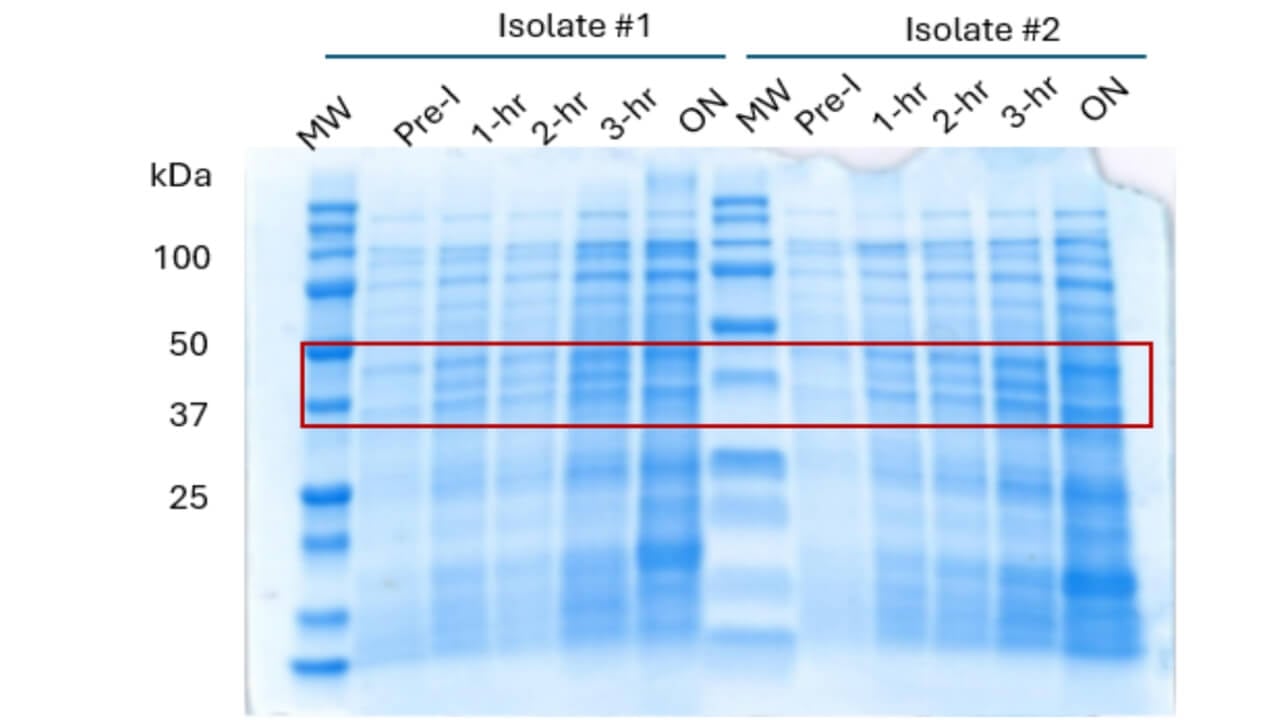
Figure 2. Gel electrophoresis of IPTG induced sample, with band at ~38 kDa highlighted (6xHis-SUMO-NS2B-NS3 MW: 38.2 kDa)
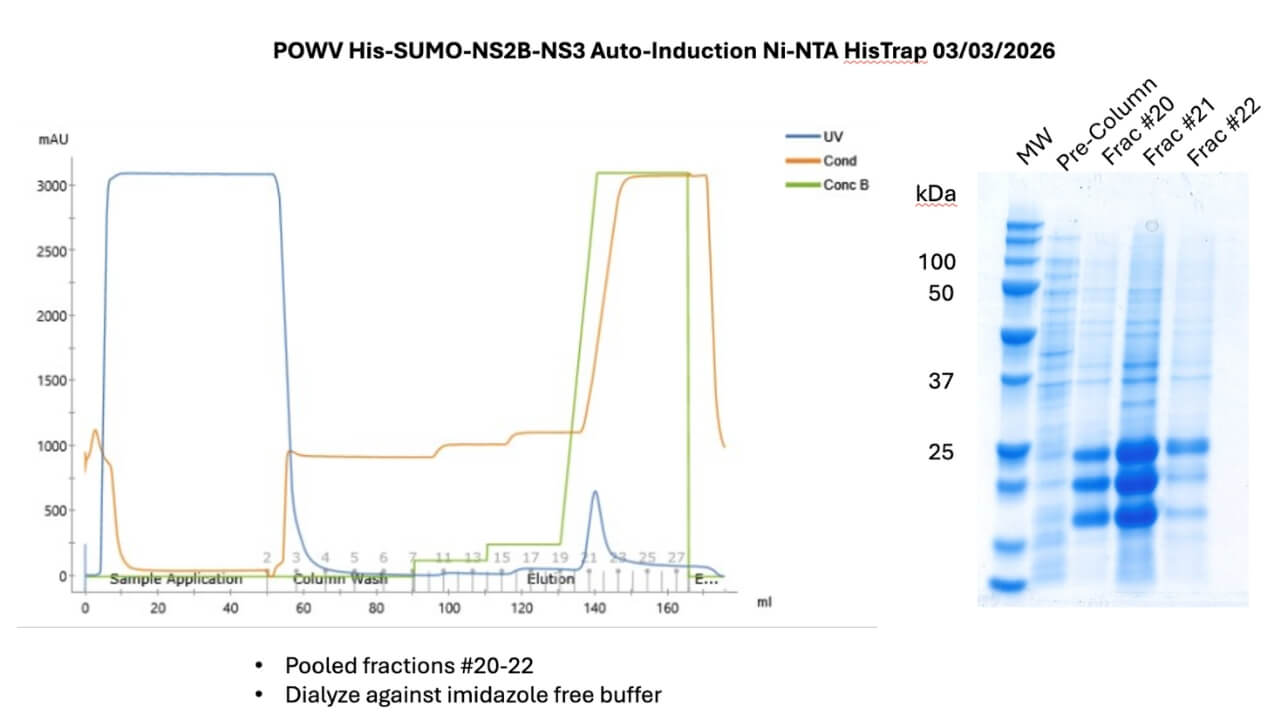
Figure 3: A) Ni-NTA FPLC elution profile; blue: UV absorbance (correlated to protein concentration), green: elution buffer concentration. Peak corresponding to purified protein highlighted. B) Gel of highlighted fractions vs pre-purification.
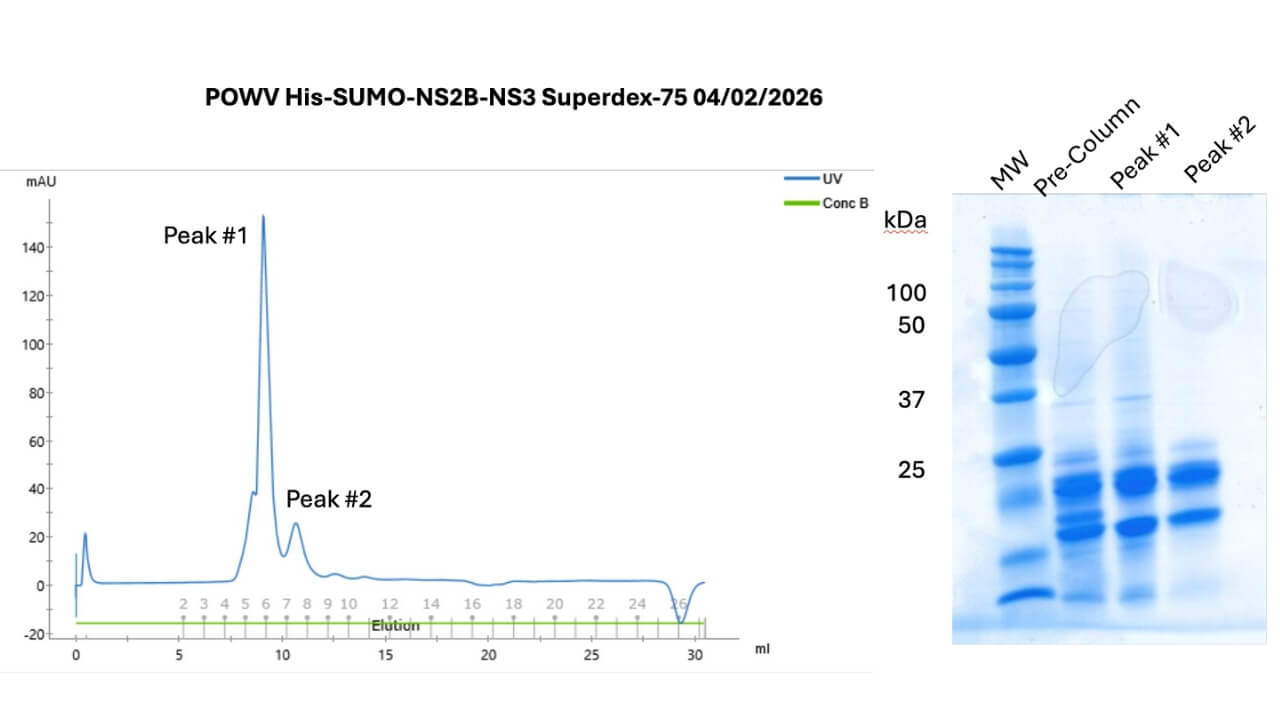
Figure 4: A) Size exclusion FPLC elution profile, showing peak #1 (likely aggregated protein) and peak #2 (likely protein of interest). B) Gel of eluted peaks, showing expected banding at autoproteolysis fragment sizes
This serves as an overview of the project and does not include the complete work. To further discuss this project, please email Zachary Dougan.
In CHE 491: Chemistry Research II, students continue their work on a chemistry research project, which they began in CHE 490. A minimum of 100 lab hours or equivalent is required.
We've sorted each of our undergraduate, graduate and doctoral programs into unique Areas of Interest. Explore these categories to discover which programs and delivery methods best align with your educational and career goals.
Explore Physical/Life Sciences at Quinnipiac
Explore Health and Medicine at Quinnipiac